
Finding Hope: Unlocking the Best Addiction Treatment in Maryland
When a patient missed several consecutive doses at Genesis Treatment Center’s Westminster clinic, the counselor did not wait for him to call back. She reached out on the second day, learned the barrier was transportation, and Genesis paid for an Uber so he could return that same day. The team then arranged ongoing rides through Carroll County’s Ride With Us program, and he stayed connected to care. That follow-through, not the medication alone, is what makes hope real in opioid treatment.
If you are reading this, you or someone you love is likely somewhere in the middle of a hard cycle. Maybe you have tried before. Maybe the last place did not work, or made you feel like a number. You did the right thing by looking. What you want to know is simple and fair: will a program actually start soon, and does it treat the whole problem or just hand out medication? Let us walk you through what the best addiction treatment in Maryland looks like, in plain terms, so you can decide with clear eyes.
Why Waiting Weeks for Help Is the Most Dangerous Part
The gap between deciding to get help and actually starting treatment is where people get hurt. When someone finally reaches the point of asking for help, the worst thing you can do is tell them to come back in two or three weeks. Cravings do not pause for a waitlist. That waiting period is when the risk of return to use and overdose is highest, because the decision to change is fragile and the withdrawal is loud.
Genesis Treatment Center was built to close that gap. You can call, verify your insurance, and begin medication-assisted treatment quickly. Same-day intake is not a slogan here. It means a real, ordered process. First, the intake team handles registration and insurance verification. You provide identification and insurance information, and you get a clear explanation of services, what to expect, and your patient rights. Genesis accepts Medicaid, Aetna, Blue Cross Blue Shield, Cigna, and UnitedHealthcare, so most people find their plan is covered.
Next comes a clinical assessment, where the medical team reviews your history and confirms you are safe to begin. Then, when appropriate, you receive your first dose. That is the whole point of the model: to meet you where you are, on the day you are ready, before the window closes.
Here is the honest part. Same-day access does not mean anyone is rushed or pushed. It means the door is open when your courage is. There is no shame in asking for treatment, and you should not have to prove your desperation by waiting through it. Your life matters, and the timing of care should reflect that.
Medication and Counseling Together: How Real Treatment Actually Works
Medication alone stabilizes the body, but it does not rebuild the life. That is why the best addiction treatment in Maryland pairs medication with real clinical support. At Genesis, the model centers on medication-assisted treatment using methadone maintenance and buprenorphine under medical supervision. These medications reduce withdrawal and cravings so your brain is steady enough to do the harder work. Opioid use disorder is a chronic, treatable medical condition, and, as the American Society of Addiction Medicine notes in its national practice guidance, combining medication with counseling is the standard of effective care.
The counseling side is where the underlying drivers get addressed. Genesis provides individual counseling, group therapy, and an Intensive Outpatient Program (IOP) for people who need more structure. Add in regular drug testing and ongoing medical oversight, and you have a program that watches the whole picture, not just the prescription. Medication holds the ground. Counseling and group work address the triggers, the trauma, and the behaviors that pull a person back toward use.
A real example shows how this works together. One patient returned to use while already on MAT. Instead of treating that as a failure, the clinical team responded. They made a modest increase to the medication dose and moved the person from standard outpatient counseling into IOP. Within a few weeks in IOP, the patient stopped using other substances and showed greater stability. That is accountability without punishment. A return to use is information the team acts on, not a reason to give up on you.
This is the difference between a dispensary and a treatment program. A dispensary hands you medication and sends you out. A treatment program builds an individualized treatment plan around you, adjusts it when life changes, and keeps a clinical team watching for the moment you need more support. We treat our patients like family, which means we notice when something is off, and we do something about it.
What Happens When You Need More Than Outpatient Care
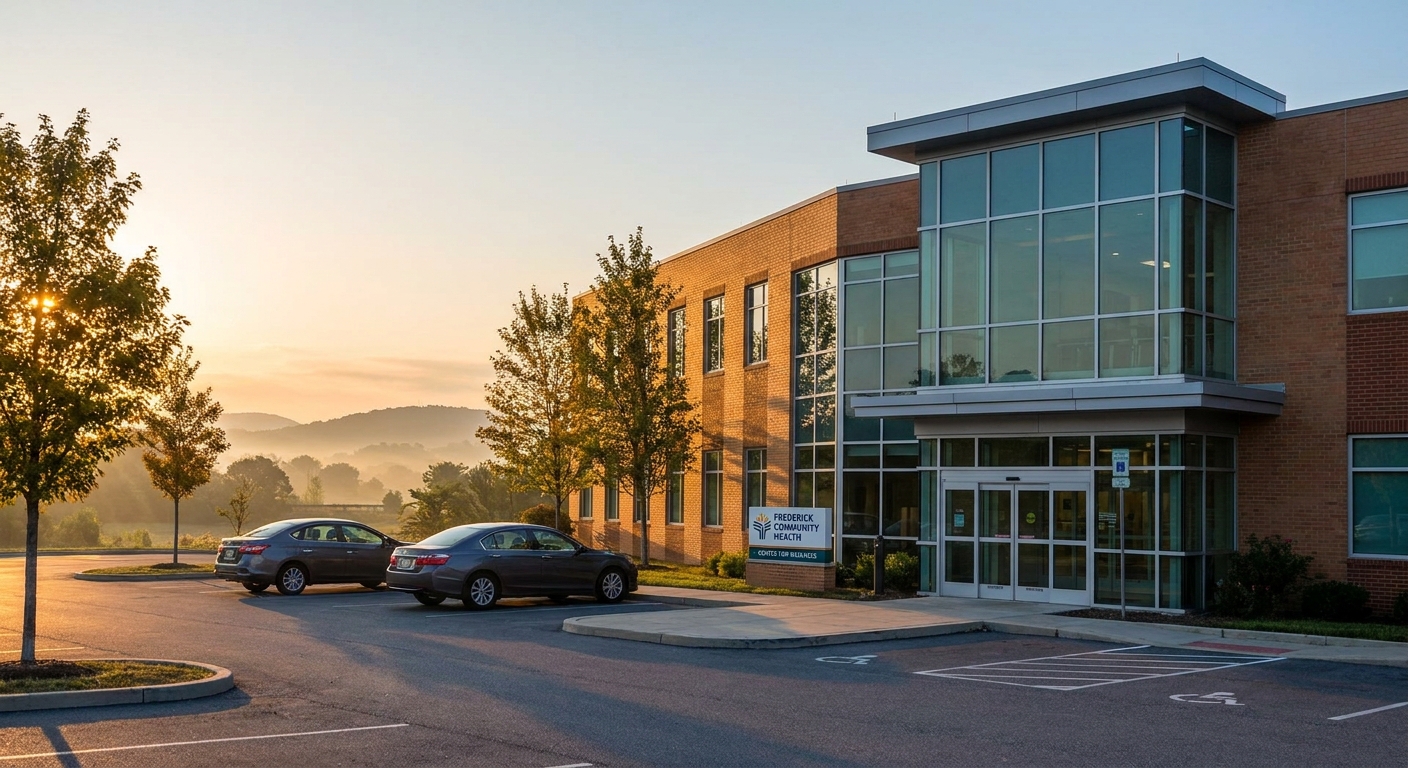
Most people with opioid use disorder do not need residential treatment. They need outpatient medication-assisted treatment that fits into a real life. That is what Genesis operates in Westminster and Frederick: outpatient MAT and IOP, delivered close to home so families can stay involved. For the majority of people, this level of care is exactly what stabilizes them and keeps them stable.
There are times, though, when someone needs a higher level of care first, such as medical detox or residential treatment. Genesis is honest about what it does and does not offer. It does not provide inpatient hospitalization, residential treatment, or detox on site. What it does provide is coordination. When you need that higher level of care, the team refers you to a partner program, helps arrange the transition, and stays in the loop rather than leaving you to figure it out alone.
Then, when you are clinically ready, Genesis welcomes you back into outpatient treatment. This matters more than it sounds. A common way people fall through the cracks is being handed off between programs with no one owning the connection. You leave one place, you are supposed to find the next, and somewhere in that gap you disappear. The coordinated handoff is designed to prevent exactly that. You are not on your own to navigate a confusing system while you are still fragile.
For a family member, this is the reassurance you have been looking for. You want to know that if the situation gets worse, there is a plan, not a shrug. You want a program that will say, “This is beyond what we do, here is where you go, and here is your seat waiting when you come back.” That is what continuity of care looks like in practice, and it is a big part of why local, connected addiction treatment in Maryland beats a facility hours away.
Take-Home Medication and Telehealth: Treatment That Fits a Working Life
Daily clinic visits can feel impossible when you have a job, children, or both. One of the quiet reasons people abandon treatment is that the schedule collides with the rest of their life. The best addiction treatment in Maryland understands this and adapts to you as you prove you are steady, rather than keeping everyone on the same rigid daily routine forever.
Genesis offers take-home medication programs for stable patients and telehealth counseling services. Stability, in this context, is not a guess. It is demonstrated over time through consistent attendance, drug testing results, engagement in counseling, and a clear pattern of following the treatment plan. As you show that stability, you can earn take-home doses that reduce how often you have to be at the clinic in person. Telehealth counseling lets you keep up your therapy sessions without leaving work early or missing a school pickup.
Picture a parent who works a full shift and cannot take time off every morning. Early in treatment, coming in daily may be part of the structure that keeps them safe. As months pass and their life steadies, take-home medication and telehealth visits let them hold their job, care for their kids, and stay in treatment at the same time. That is what makes MAT sustainable for the long haul, and opioid recovery is a long haul, not a quick fix.
These adaptations are not shortcuts or rewards for being “good.” They are clinical decisions made with your safety in mind, adjusted as your situation changes. The goal is a version of treatment you can actually keep doing for as long as you need it, because a program you cannot sustain is not really treatment at all.
Treating the Whole Person, Not Just the Addiction
Recovery falls apart when the rest of life is falling apart. You can prescribe the right medication and hold the right counseling sessions, but if a person cannot get a ride to the clinic, cannot see a primary care doctor, or has nowhere stable to sleep, the treatment plan is fighting uphill. This is why Genesis runs a Health Home program that coordinates care across medical, mental health, and social needs.
Health Home care coordination connects you to primary care, mental health services, and practical supports like transportation assistance. Return to the story at the top of this page. The patient who missed several doses was not refusing treatment. The barrier was a ride. The counselor caught it on the second day, Genesis paid for an Uber to get him back that same day, and then set up ongoing transportation through Carroll County’s Ride With Us program. That is Health Home coordination in action, and it is the reason the person stayed in care instead of disappearing.
For families, this is often the deciding factor. You have watched your loved one lose ground not because they stopped wanting help, but because a dozen small barriers stacked up: a missed appointment, a lost phone, no way to get across town. A program that treats opioid addiction as part of your whole health, rather than an isolated problem, addresses those barriers before they become the reason someone drops out. You are not alone in managing all of it.
The message underneath the coordination is simple. Your recovery does not live in a vacuum, and neither do you. When medical care, mental health support, and everyday logistics all get handled by a team that talks to each other, the plan holds together on the days that would otherwise break it.
Why Genesis Has Been Answering the Overdose Crisis Since 2008
Genesis Treatment Center opened in Westminster on July 1, 2008. It did not arrive late to a crowded market. It opened in direct response to a local emergency, after Carroll Hospital reportedly saw more than 140 overdose incidents every month. In its first month, the clinic completed 27 intakes. From day one, this was an overdose-response resource built for this community, by people who saw the crisis up close.
That history matters when you are choosing where to trust your life or your loved one’s life. Continuous presence in Westminster since 2008, and now serving Frederick as well, means the team has treated people through the worst years of the opioid epidemic, including the rise of fentanyl. Maryland’s own overdose data, tracked by the Maryland Department of Health, shows how relentless the pressure has been across the counties Genesis serves. A clinic that has been in the fight this long has seen nearly every version of what you are going through.
Longevity also tells you something a brochure cannot. Programs that overpromise and underdeliver do not last this long in the same community. The people who came in for those first 27 intakes, and the many who followed, kept coming because the care was real and the door kept opening. That is the quiet proof behind the mission to save lives through treatment.
You are not the first person to walk in scared and unsure whether it will work this time. You will not be the last. What you will find is a team that has done this many times, that tells the truth about what treatment can and cannot do, and that stays with you when barriers show up. Nobody can promise recovery, and anyone who does is not being honest. What Genesis can promise is that you will be met with dignity, started quickly, and supported for as long as you need.
Frequently Asked Questions
Can I start addiction treatment the same day I call in Maryland?
Yes. Genesis Treatment Center offers same-day intake and dosing at its Westminster and Frederick locations. The process begins with registration and insurance verification, moves to a clinical assessment, and, when appropriate, includes your first dose of medication that same day. You do not have to wait weeks to begin.
What is medication-assisted treatment, and do I need counseling too?
Medication-assisted treatment, or MAT, uses methadone maintenance or buprenorphine under medical supervision to reduce withdrawal and cravings. Counseling is part of the plan because medication steadies the body while individual counseling, group therapy, and IOP address the triggers, trauma, and behaviors behind continued use. Both together work better than either alone.
Does Genesis Treatment Center accept Medicaid and commercial insurance?
Genesis accepts Medicaid, Aetna, Blue Cross Blue Shield, Cigna, and UnitedHealthcare. Insurance verification happens at the very start of intake, so you can find out quickly whether your plan covers your care and get started the same day when it does.
What happens if I return to use while in treatment at Genesis?
A return to use is treated as information, not failure. The team responds clinically, which can include a modest increase to your medication dose and moving you into a higher level of support like IOP. In one real case, that response helped a patient stop using other substances and reach greater stability within a few weeks. This is accountability without punishment.
Can I get take-home medication or do telehealth visits at Genesis?
Yes. Stable patients can qualify for take-home medication programs that reduce how often they come to the clinic, and telehealth counseling is available for many visits. Stability is measured over time through attendance, drug testing, and engagement in your plan, and these options make addiction treatment in Maryland easier to sustain alongside work and family.
What if I need detox or residential treatment instead of outpatient care?
Genesis provides outpatient MAT and IOP, not on-site detox or residential care. When you need a higher level of care, the team refers you to a partner program, coordinates the transition so you are not navigating it alone, and welcomes you back to outpatient treatment when you are clinically ready.
Call Genesis Treatment Center in Westminster or Frederick today to verify your insurance and schedule a same-day intake appointment. You do not have to wait weeks to start medication-assisted treatment, and you do not have to face this alone. Pick up the phone while the decision is fresh, because the sooner you call, the sooner the barriers between you and treatment start coming down.