
You might be wondering, does Medicaid pay for counseling for addiction? If you have Medicaid coverage, you’re not alone in seeking clarity on what services are included for substance use disorder treatment. Under federal parity laws, Medicaid plans are required to cover mental health and addiction services without greater restrictions than medical or surgical benefits. In this guide, you’ll learn:
- How Medicaid’s behavioral health services work
- Which counseling options are covered
- What medication-assisted treatment (MAT) you can access
- How intensive outpatient and rehab settings fit in
- Eligibility rules, cost-sharing, and provider networks
- Steps to overcome barriers and get started
By the end, you’ll have a clear roadmap for tapping into your Medicaid benefits and moving forward on your path to recovery.
Medicaid coverage overview
Parity requirements explained
Federal statutes mandate that Medicaid and CHIP programs treat mental health and substance use disorder benefits no more restrictively than physical health services. These parity requirements apply to all Medicaid benchmark plans, CHIP, and managed care organizations, ensuring your counseling and treatment access aligns with other medical care [1].
Covered behavioral health services
Medicaid’s mandatory benefits include medically necessary inpatient and outpatient hospital services, physician services, and home health care. Under optional rehabilitative services, many states extend coverage to recovery-oriented therapy, counseling, case management, and peer support. To see a full list, check which addiction treatments are covered by Medicaid.
State plan variations
While the federal baseline is consistent, each state defines medical necessity and optional benefits differently. Some states cover extensive outpatient counseling and IOP, while others may limit residential stays. Reviewing your state’s Medicaid State Plan or Section 1115 demonstration details can clarify local benefits [2].
Explore counseling services
Individual therapy options
Medicaid generally covers one-on-one counseling sessions with licensed clinicians or counselors when deemed medically necessary. These sessions address underlying issues contributing to substance use and equip you with coping strategies.
Group therapy programs
Group counseling fosters peer support and shared learning. Medicaid-covered group sessions often focus on relapse prevention, skill building, and mutual encouragement. You’ll benefit from hearing others’ experiences and gaining accountability.
Family counseling support
Because addiction impacts loved ones, many Medicaid programs include family therapy or education sessions. Engaging family members can strengthen your support network and improve long-term outcomes.
For an overview of all services your plan may cover, see our guide on what addiction services are covered under Medicaid.
Review MAT coverage
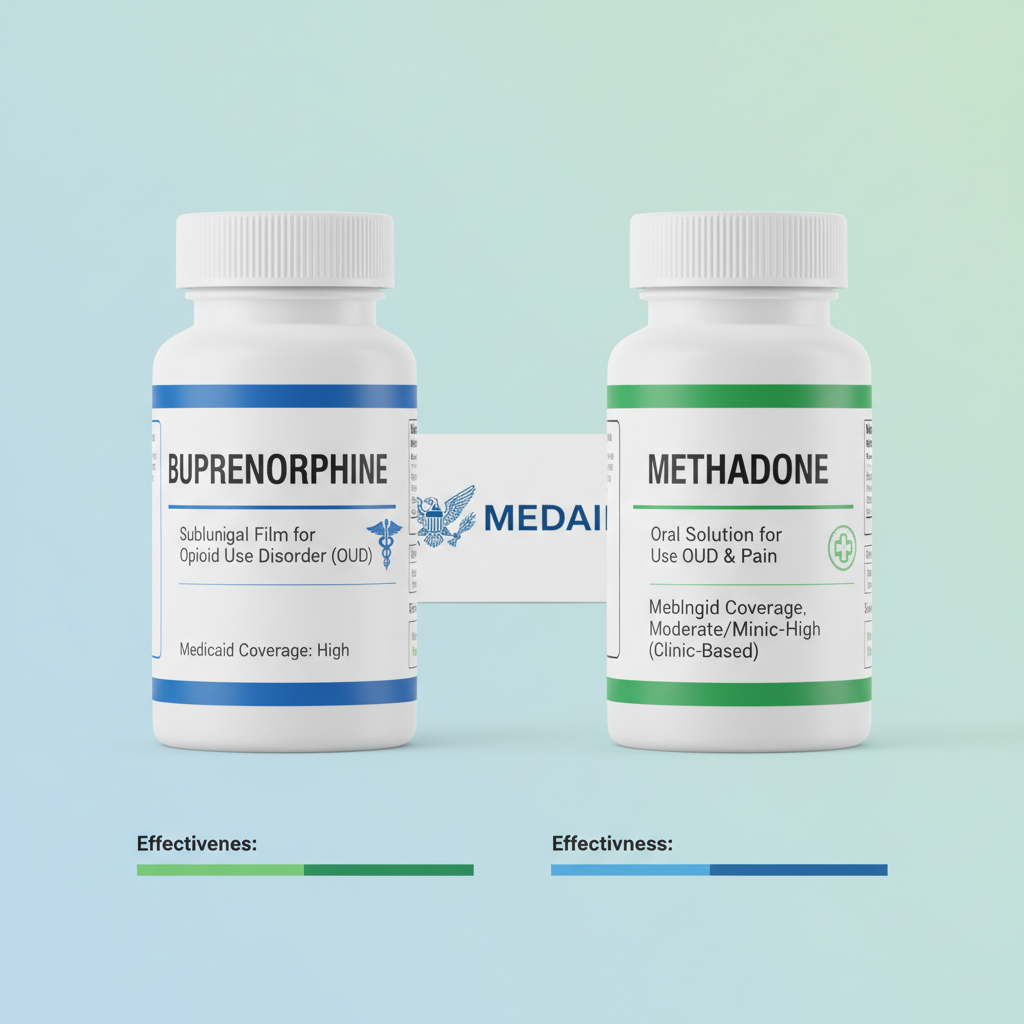
Buprenorphine and Suboxone
Buprenorphine, often dispensed as Suboxone or Subutex, is FDA-approved for opioid use disorder. Medicaid covers these medications alongside counseling and behavioral therapy. If you’re unsure about coverage details, explore does Medicaid cover Suboxone treatment or is Subutex covered by Medicaid. To locate providers, see suboxone doctors that take Medicaid insurance or how to get Medicaid coverage for Suboxone.
Methadone treatment programs
Medicaid funds methadone services through certified opioid treatment programs (OTPs). You can find participating clinics in your state by visiting medicaid coverage for methadone clinics and learn more about billing at can Medicaid pay for methadone treatment. Methadone dosing is typically paired with counseling and regular medical monitoring.
Other FDA-approved medications
Beyond methadone and buprenorphine, Medicaid covers FDA-approved drugs for alcohol and opioid disorders, including naltrexone, acamprosate, disulfiram, and naloxone. All states and DC provide naloxone and disulfiram; 49 states cover naltrexone as of 2015 [3]. Table 1 outlines common MAT options:
Table 1: Medicaid-covered addiction medications
| Medication | Coverage status | Typical use |
|---|---|---|
| Methadone | Covered at OTPs | Opioid use disorder |
| Buprenorphine | Covered in office or pharmacy | Opioid use disorder |
| Naltrexone | Covered in most states | Alcohol and opioid use disorders |
| Acamprosate | Varies by state | Alcohol use disorder |
| Disulfiram | Covered nationwide | Alcohol use disorder |
| Naloxone | Covered nationwide, no copay in many states | Overdose reversal |
For more on medication programs within Medicaid, visit medicaid opioid treatment programs.
Examine intensive outpatient programs
IOP components and benefits
Intensive outpatient programs (IOP) provide structured treatment without an overnight stay. Typical IOPs include:
- 9 to 20 hours of therapy per week
- Individual and group counseling
- Medication management
- Case coordination
These programs let you maintain family and work commitments while receiving robust support.
State coverage details
Most states cover IOP under the rehabilitative services option in their Medicaid plans. Coverage can vary in allowable hours and duration. Check medicaid intensive outpatient program coverage for state-specific rules.
Assess rehab settings
Outpatient rehab coverage
Outpatient rehab involves scheduled sessions at clinics or community centers. Medicaid mandatory benefits often include outpatient hospital and clinic services. Optional rehab services can cover counseling, medication administration, and follow-up care. Review medicaid outpatient rehab coverage and addiction programs covered by Medicaid to confirm your plan’s scope.
Residential treatment options
Residential rehab offers 24-hour care in a live-in facility. Coverage for residential stays—both detox and longer-term rehab—depends on state definitions of medical necessity. As of 2015:
- 32 states cover inpatient detox
- 34 states cover outpatient detox
- 26 states and DC cover residential rehab beyond detox
- 17 states cover partial hospitalization services for SUD [3]
If you need detox specifically for opioids, explore medicaid coverage for opioid detox and medicaid coverage for opioid addiction treatment.
Check eligibility and costs
Enrollment requirements
To access counseling and treatment, you must be enrolled in Medicaid. Eligibility typically considers your income, household size, and state thresholds. Under EPSDT, youth may receive early periodic screening and treatment for SUD. Contact your state Medicaid office for documentation guidelines.
Co-pays and deductibles
Medicaid often imposes nominal copays for non-emergency services, but mental health and SUD benefits cannot have more restrictive cost-sharing than other medical services. Cost-sharing limits differ by state:
- Some states waive copays for SUD services
- Others require small fees per visit
- Annual deductibles are rare for Medicaid
Review your plan’s member handbook or provider portal for exact figures.
Locate Medicaid providers
Using state directories
Your state Medicaid website typically offers a searchable directory of in-network providers. You can filter by specialty—such as SUD counseling, OTPs, or IOP. In California alone, 896 centers currently accept Medicaid [4].
Medicaid-friendly clinics
Look for community health centers, FQHCs, and behavioral health clinics that specialize in Medicaid billing. You can also find Suboxone prescribers and counseling practices by visiting how to find a Suboxone clinic that takes Medicaid and suboxone doctors that take Medicaid insurance. For general addiction treatment options, see medicaid insurance for addiction treatment.
Address access barriers
Transportation and telehealth
Non-emergency medical transportation is a Medicaid benefit in many states, helping you get to appointments. Telehealth coverage expanded during recent federal guidance, allowing virtual counseling and MAT visits, which can reduce travel challenges.
Peer support services
Peer recovery support specialists—individuals with lived experience—offer mentoring and encouragement. Some states bill peer services under rehabilitative or waiver programs. Illinois, for example, covers peer recovery under CPT code H2014 as a pilot program [5].
Holistic care options
Optional Medicaid benefits may include training in independent living, relapse prevention, employability skills, and relationship counseling. These services support long-term wellness beyond clinical therapy. Learn more about medicaid assistance for outpatient addiction programs.
Plan your next steps
Contact your Medicaid plan
Reach out to your state Medicaid office or member services line. Ask for your handbook’s section on substance use disorder benefits and behavioral health.
Speak with treatment specialists
Schedule an intake with a Medicaid-friendly facility. They can verify coverage, obtain prior authorizations, and help you navigate any paperwork.
Build a support network
Engage family, friends, and peer specialists in your recovery journey. Having a robust support system increases accountability and fosters lasting change.
Medicaid can be a powerful ally in your recovery, covering counseling, medications, outpatient programs, and, in many cases, residential care. By understanding your benefits and connecting with the right providers, you’ll remove barriers and access the comprehensive care you deserve. If you need help exploring your options, reach out to a Medicaid-friendly treatment center today—your path to lasting recovery starts with the first step.