
Understand IOP coverage
As you navigate the path to recovery, understanding medicaid intensive outpatient program coverage can help you maximize your benefits and access the support you need. Medicaid intensive outpatient program coverage refers to the range of services that Medicaid offers for individuals who require structured, nonresidential treatment for substance use disorders. By knowing what’s included under your state’s plan, you can confidently enroll in an IOP that aligns with your recovery goals.
What is an intensive outpatient program?
An intensive outpatient program (IOP) provides a structured treatment environment that sits between weekly therapy and full inpatient care. Typically, you attend multiple sessions per week—often three or more days with a minimum of nine treatment hours—while living at home. This format allows you to engage in daily responsibilities such as work, school, or family care while benefiting from comprehensive clinical support.
Medicaid coverage overview
Medicaid covers intensive outpatient programs under most state plans and waivers, though the details of coverage vary widely by state KFF. Commonly covered services include:
- Individual therapy sessions
- Group counseling
- Family therapy when clinically indicated
- Medication management for substance use disorders
- Substance use and mental health education
- Crisis intervention services
Although Medicaid fee-for-service rates and managed care arrangements differ across states, the program’s fundamental goal remains the same: to provide you with the necessary tools for lasting recovery.
Eligible settings
Your medicaid intensive outpatient program coverage applies to services delivered in a variety of approved settings, for example:
- Hospital outpatient departments
- Medicaid-certified community mental health centers
- Federally qualified health centers
- Rural health clinics
- Opioid treatment programs offering medication-assisted treatment
Knowing which locations accept your Medicaid plan helps you select a provider network that meets both logistical and clinical needs.
Explore covered services
Once you confirm your eligibility, you can dive into the specific services covered by your Medicaid plan. Understanding the breadth of these offerings helps you tailor your treatment experience to your unique recovery requirements.
Individual and group therapy
Medicaid covers evidence-based therapeutic approaches to address the root causes of substance use. You can expect:
- Cognitive behavioral therapy (CBT) to reshape negative thought patterns
- Motivational interviewing to enhance readiness for change
- Group therapy for peer support and shared accountability
- Family therapy to rebuild communication and support within your household
If you’re seeking specialized programs—gender-specific or trauma-informed care—check with your provider to see if your state’s Medicaid plan covers these modalities.
Medication management
Medication-assisted treatment (MAT) is often a cornerstone of IOP services. Under medicaid intensive outpatient program coverage you may receive:
- Clinical assessments by a prescribing clinician
- Ongoing medication monitoring
- Prescription coverage for FDA-approved medications
Medicaid programs coordinate with providers to ensure you receive safe dosing and the education needed to adhere to your medication plan.
Substance use education
Knowledge is power. Your coverage includes educational sessions on:
- Recognizing triggers and early warning signs
- Developing coping strategies and relapse prevention plans
- Understanding the physiology of addiction
This foundational education empowers you to participate actively in your recovery and reduces the risk of future setbacks.
Co-occurring disorder treatment
Because substance use often coincides with mental health challenges, many state Medicaid plans authorize integrated care. Covered services can include:
- Screening and assessment for depression, anxiety, PTSD, and other conditions
- Dual-diagnosis therapy led by clinicians trained in co-occurring disorders
- Access to psychiatric consultations and medication management for mental health conditions
Integrated care ensures that both your substance use disorder and any accompanying mental health issues receive simultaneous attention.
Navigate medication access
Medicaid’s commitment to comprehensive care extends to covering a range of FDA-approved medications for addiction treatment. Navigating this coverage ensures you get the medication support you need.
Suboxone coverage
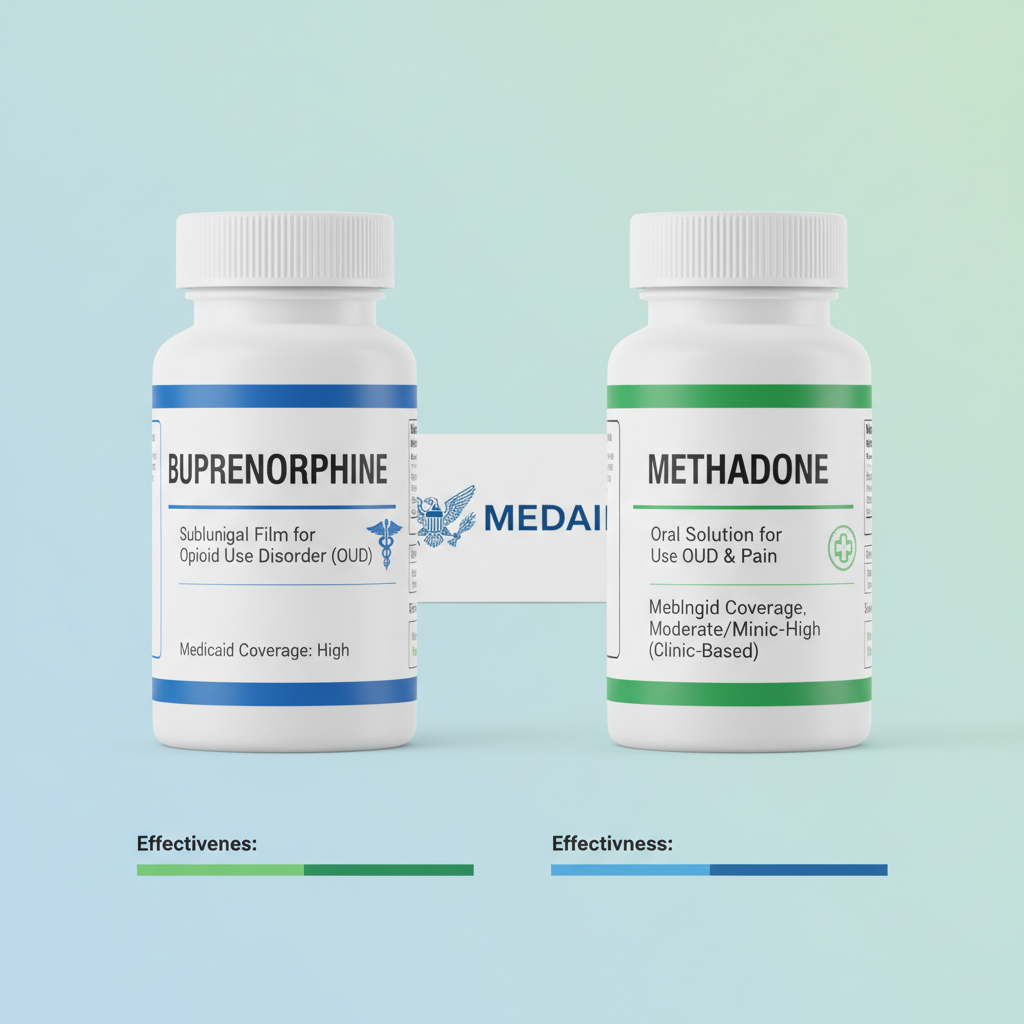
Most Medicaid programs cover buprenorphine products, including Suboxone, as part of medication-assisted treatment. Coverage details may vary:
- Prior authorization requirements differ by state
- Quantity limits and refill intervals may apply
- Some states encourage you to use preferred pharmacies or in-network providers
If you need more information on buprenorphine coverage, explore our guide to medicaid covered buprenorphine treatment.
Methadone coverage
Methadone maintenance treatment is an evidence-based option for many individuals. Under Medicaid:
- Opioid treatment programs (OTPs) bill Medicaid directly for dosing and clinical services
- Counseling and group therapy at the OTP are often included
- Some states require a separate enrollment or certification for OTPs to accept Medicaid
Learn more at medicaid coverage for methadone clinics or see if Medicaid can pay for methadone treatment.
Buprenorphine and Subutex
In addition to Suboxone, Medicaid plans may cover other buprenorphine formulations such as Subutex:
- Coverage varies by plan; some require prior authorization
- Co-payments may apply, but most states waive them for MAT
- If you’re unclear about coverage, see is subutex covered by medicaid or does medicaid cover suboxone treatment
Coverage comparison table
| Medication | Covered by Medicaid | Notes |
|---|---|---|
| Buprenorphine (Suboxone) | ✔ | Prior authorization may be required; see medicaid covered buprenorphine treatment |
| Buprenorphine (Subutex) | ✔ | Plan-specific limits; confirm with your provider |
| Methadone | ✔ | Delivered through certified OTPs; therapy included |
| Naltrexone | ✔ | Injectable and oral forms; may require step therapy |
Coordinate your care
Effective coordination between you, your providers, and Medicaid can make the enrollment and treatment process smoother. Here are strategies to stay organized and proactive.
Dually eligible individuals
If you qualify for both Medicaid and Medicare, recent changes have shifted how your IOP services are billed:
- As of January 1, 2024, Medicare covers in-person IOP services under Part B in certain settings Center for Health Care Strategies
- Medicaid becomes the payer of last resort for services covered by Medicare
- Clear communication between your Medicaid managed care plan and Medicare provider is essential
Staying on top of billing details helps prevent gaps in coverage and unexpected costs.
Prior authorization tips
Many Medicaid plans require pre-approval for IOP services:
- Submit documentation of medical necessity, including your diagnosis and treatment history
- Work with your provider to complete the required forms
- Track submission dates and follow up if you haven’t received a decision within the plan’s stated timeframe
Care coordination strategies
Strong coordination ensures you get the most from your medicaid intensive outpatient program coverage:
- Designate a point person at your treatment center to handle billing questions
- Keep a personal file with copies of all prior authorizations, treatment plans, and progress notes
- Use your state’s Medicaid member portal to monitor claims and approvals
- Ask about case management services that your Medicaid plan may provide
Prepare for IOP participation
Knowing what to expect helps you transition smoothly into an intensive outpatient program. Preparation reduces stress and lets you focus on recovery.
Eligibility and enrollment
To enroll in an IOP with Medicaid coverage, you generally need to:
- Confirm your Medicaid eligibility and plan details
- Obtain a clinical assessment from an approved provider
- Verify that your chosen program is in-network with your Medicaid plan
- Complete any required enrollment paperwork or prior authorizations
You can contact your state Medicaid office or use the member resources on your plan’s website to get started.
Appointment scheduling
IOP schedules vary, but most programs offer:
- A minimum of 9 treatment hours per week
- Three to five days of services, typically during business hours
- Options for flexible schedules to accommodate work or school obligations
Early scheduling ensures you secure the times that fit your personal commitments.
Transportation and support
Lack of reliable transportation can be a barrier to care. Under many Medicaid plans:
- Nonemergency medical transportation (NEMT) is available for covered services
- Ride-share or voucher programs may be offered in your state
- Some centers provide shuttle services or partner with community organizations
Reach out to your local Medicaid office or your treatment provider to arrange transportation that works for you.
Choose a Medicaid-friendly center
Selecting the right facility can remove barriers and set the stage for success. Keep these criteria in mind when evaluating programs.
What to look for
- Confirmation that the center accepts your Medicaid plan (fee-for-service or managed care)
- A robust offering of evidence-based therapies and MAT options
- Experienced staff trained in co-occurring disorders
- Case management and peer support services
Facility features
A Medicaid-friendly program typically includes:
- On-site medication-assisted treatment, including buprenorphine and methadone
- Integrated mental health and substance use care
- Family education and support groups
- Nonemergency transportation assistance
Questions to ask
Before enrolling, ask prospective centers:
- Do you accept my Medicaid plan, and what prior authorizations are required?
- Which evidence-based therapies and medications do you provide?
- How do you coordinate care with outside providers and state agencies?
- What support services are available, such as case management or peer mentoring?
Understanding these details ensures you choose a program that truly meets your needs.
Next steps
Maximizing your medicaid intensive outpatient program coverage starts with understanding your benefits and choosing the right provider. By exploring covered services, coordinating care, and preparing for participation, you set a solid foundation for recovery. If you’re ready to take the next step, reach out to our Medicaid-friendly center today. We’re here to guide you through every stage of your journey, removing barriers so you can focus on healing and growth.