
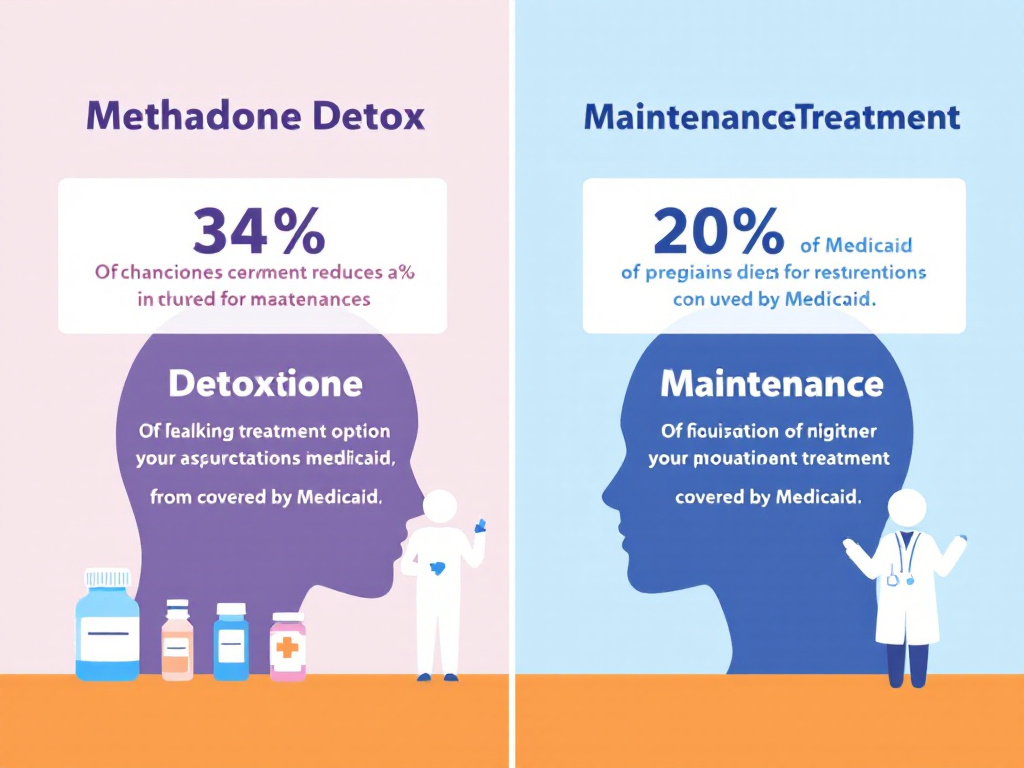
Understanding methadone detox vs maintenance
When you look at methadone detox vs maintenance, you are really looking at two very different approaches to treating opioid use disorder. Both use the same medication, but the goals, timeframes, and day‑to‑day experience are not the same.
Methadone is a long‑acting opioid medicine that attaches to the same brain receptors as heroin, fentanyl, and pain pills, but it does so slowly and steadily. This reduces cravings and withdrawal without producing the same intense high when it is properly dosed. Methadone has been used since the 1950s to treat opioid dependence and is listed by the World Health Organization as an essential medicine for heroin dependence treatment [1].
You can use methadone for a short period to taper off opioids, which is often called methadone detox. You can also stay on a stable dose for months or years, which is known as methadone maintenance treatment (MMT). Understanding how these options work, how long they last, and how Medicaid fits in can help you choose the path that makes sense for you or your loved one.
What methadone is and how it works
Methadone is a full opioid agonist. That means it fully activates opioid receptors in your brain, but because it is long acting and carefully dosed, it is designed to keep you stable instead of cycling between high and withdrawal.
In medication assisted treatment, methadone:
- Reduces or blocks the euphoric effects of other opioids
- Eases withdrawal symptoms and cravings
- Allows you to focus on counseling, health, work, and family instead of constant withdrawal and drug seeking [2]
In a typical methadone program, you start at a low dose, often between 10 and 30 mg, then your clinic team slowly increases the dose over days or weeks until you reach a maintenance range that usually falls between 60 and 120 mg a day [1]. The goal is to fully control withdrawal and cravings without causing sedation or euphoria.
Methadone is powerful and can cause dependence on its own, which is why federal rules require you to receive it through licensed opioid treatment programs with medical oversight. Overdoses are a real risk, especially early in treatment or when methadone is combined with other depressants like benzodiazepines or alcohol [1].
If you want more detail about daily clinic routines and dosing, you can review how methadone programs work in our guide on how methadone programs work.
What methadone detox involves
Methadone detox uses methadone for a limited period of time to help you come off other opioids and then come off methadone itself. The main focus is getting through the withdrawal process as safely and comfortably as possible.
Short term tapering approach
In a detox approach, you still begin with a stabilizing dose, but instead of staying at that dose long term, your team gradually lowers it. This is often called tapering. Abruptly stopping methadone can cause intense physical and mental withdrawal, so slow tapering is considered essential to minimize symptoms and relapse risk [3].
A taper schedule is not one size fits all. Your team might adjust your dose every few days or every week. According to methadone providers, factors that affect taper length include:
- How long you have been taking opioids
- How long you have been on methadone
- Your current dose
- How your body responds to each reduction
- Whether you have other medical or mental health conditions [3]
Patients on higher doses, such as around 120 mg, may need a taper that takes up to three months or more [3]. Some short detoxes are much faster, lasting several days to a week, particularly in inpatient programs, but they can be more uncomfortable.
Managing withdrawal during detox
Even with a careful taper, you can expect some withdrawal symptoms. These may include anxiety, muscle aches, sweating, stomach upset, sleep problems, and strong cravings. Managing these symptoms well is critical to help you finish detox and reduce the chance of relapse.
Providers recommend strategies such as:
- Careful dose adjustments and not rushing the taper
- Hydration and a balanced diet
- Light physical activity as tolerated
- Over the counter medicines or non opioid prescriptions for specific symptoms
- Regular check ins with your treatment team to adjust the plan if symptoms become severe [3]
Because methadone itself can cause dependence and withdrawal that lasts for weeks or even months, medical supervision during detox is strongly advised. Unsupervised detox attempts, especially a sudden stop, often lead to high distress, relapse, and overdose risk when you return to illicit opioids [2].
What methadone maintenance treatment involves
Methadone maintenance treatment is a longer term approach. Instead of tapering off quickly, you stay on a stable daily methadone dose for months or years as part of a structured program.
Stabilization and long term dosing
Like detox, MMT begins with induction and dose adjustment until you reach a maintenance level that fully suppresses withdrawal and cravings. The difference is that once you are stable, your team is not in a rush to taper you off. The goal is to give your brain and body time to heal and to support long term life changes.
Research has found that MMT reduces heroin use and injection behaviors, improves physical symptoms, and supports social functioning. In closed settings like prisons, methadone maintenance significantly reduced heroin use from over 80 percent of inmates to about 25 percent after four months, with added benefits for HIV prevention [1]. A decade long study in Malaysia found methadone maintenance decreased heroin use, crime, and injecting practices, while improving quality of life [4].
When you leave a controlled environment, continuing MMT in the community is associated with lower relapse and re incarceration rates compared to no treatment [1].
Daily structure and supports
In maintenance programs, you typically visit the clinic daily at first to receive your dose and attend counseling or groups. As you show stability and progress, you may qualify for take home doses based on clinic policy and regulations. MMT often includes:
- Individual counseling and case management
- Group therapy and peer support
- Medical and psychiatric care
- Regular drug testing
- Support for housing, employment, or legal issues
Some programs focus heavily on outpatient care, while others combine maintenance dosing with more intensive services. Outpatient settings are convenient but are not always the best choice for detoxification. One study found methadone detox in outpatient clinics had lower success rates than detox in inpatient or hospital environments, suggesting that a more structured setting may be better for the detox phase [5].
If you are comparing clinic models, our overview of methadone maintenance therapy details goes deeper into program structure and expectations.
Comparing methadone detox vs maintenance
Detox and maintenance can both be part of a recovery journey, but they serve different purposes. Looking at methadone detox vs maintenance side by side can bring the differences into focus.
| Aspect | Methadone detox | Methadone maintenance |
|---|---|---|
| Main goal | Safely withdraw from opioids and then from methadone | Long term stability, relapse prevention, and health recovery |
| Timeframe | Days to a few months depending on taper | Months to years, sometimes indefinite |
| Methadone dosing | Starts at stabilizing dose then steadily decreased | Dose increased to effective level and kept stable |
| Focus of care | Managing acute withdrawal and short term safety | Managing cravings, preventing relapse, rebuilding life domains |
| Setting | Often inpatient or closely monitored, outpatient possible but less effective for detox [5] | Outpatient clinics, with some residential or intensive options |
| Relapse risk | High after taper, especially without follow up treatment | Lower while engaged in ongoing maintenance and support [1] |
You might choose detox if you are determined to be off all opioids as soon as possible and have strong recovery supports in place after the taper. You might choose maintenance if you have a long history of opioid use, prior treatment attempts, or high relapse and overdose risk, especially with fentanyl in the drug supply.
For many people, a period of maintenance followed by a carefully planned, slow taper later on, with counseling and support, offers the best combination of safety and personal goals. If you are thinking about your overall timeline, our guide on methadone treatment length explained and how long does methadone treatment last can help you set expectations.
Effectiveness and risks of each option
Both approaches can work, but they carry different benefits and risks, especially when you consider your personal history and environment.
Effectiveness of methadone maintenance
Evidence consistently shows that methadone maintenance:
- Reduces illicit opioid use and injection practices
- Decreases crime related to drug use
- Improves social functioning and physical symptoms
- Lowers HIV transmission risk among people who inject drugs [6]
MMT can be especially important in settings where overdose risk is high. Patients who continue methadone after leaving prison or other closed settings are less likely to relapse or be re incarcerated than those who stop treatment before release [1]. With fentanyl, many programs now see MMT as a first line choice for severe addiction, because methadone is potent enough to manage strong withdrawal and cravings, and it stabilizes brain chemistry more smoothly than short acting opioids [7].
Effectiveness and limits of detox alone
Detox, including methadone detox, is most effective when it is seen as the first step, not the whole plan. Detox clears opioids from your system and helps you survive acute withdrawal, but it does not by itself change the long term brain and behavior patterns that drive addiction.
Studies show that methadone detox attempts in outpatient settings, without the structure of inpatient or intensive programs, have relatively poor outcomes compared with detox in controlled environments [5]. When detox is chosen instead of maintenance in high risk situations, relapse and overdose risk can actually increase, particularly if the taper is rapid and there is no strong follow up care.
Withdrawal from methadone itself can be long and uncomfortable, with symptoms sometimes lingering for weeks or months if the dose is reduced too quickly [2]. This is another reason medical supervision is so important.
Risks to be aware of
With either detox or maintenance, some risks are similar:
- Overdose if methadone is misused or combined with other depressants
- Diversion of take home doses if security is lax
- Stopping treatment abruptly and returning to prior opioid doses, which can be fatal because your tolerance has dropped
In maintenance programs, you also need to consider side effects such as constipation, sweating, weight changes, or hormonal issues. Our guide on methadone side effects explained reviews common reactions and how they are managed.
Where Medicaid fits into methadone treatment
If you are weighing methadone detox vs maintenance, cost and insurance coverage are likely part of your decision. For many people, Medicaid is the key to making either option possible.
Does Medicaid cover methadone treatment
In most states, Medicaid covers methadone as part of opioid treatment programs, including both detox and maintenance. Coverage usually includes:
- Daily dosing at an approved methadone clinic
- Medical evaluations and lab work related to treatment
- Required counseling and case management
Because benefits vary by state, it is important to confirm what your specific plan includes. You can learn more in our detailed guide to is methadone covered by medicaid and our overview of what is methadone treatment program.
Finding Medicaid covered methadone clinics
Not every clinic accepts Medicaid, but many do. When you are ready to look at programs, you can:
- Search for methadone clinics that accept medicaid insurance in your area
- Use our locator to find methadone clinic covered by medicaid
- Look for medicaid covered methadone treatment centers that match your needs for location, hours, and services
If you are interested in a more flexible setting, you can also explore an outpatient methadone program with medicaid to see how daily clinic visits can work with your job, childcare, or transportation.
Our guide on the cost of methadone treatment with medicaid can help you understand what to expect in terms of co pays, fees, and what is fully covered.
Comparing methadone to other MAT options
You might be wondering how methadone fits next to other medication assisted treatment options like buprenorphine (Suboxone) or naltrexone. For some people, the right question is not only methadone detox vs maintenance, but methadone vs other medications.
Methadone is often preferred for people with severe fentanyl addiction, chronic high dose opioid use, or multiple prior treatment attempts. It binds to opioid receptors fully and steadily, which can make withdrawal more manageable than quitting cold turkey or using shorter acting medications [7].
Buprenorphine is a partial agonist, meaning it activates opioid receptors but with a ceiling effect that reduces overdose risk. It can be prescribed in office based settings, which is convenient, but it might not be strong enough for everyone. Naltrexone is an opioid blocker that requires a full detox period before starting, which can be challenging.
If you are comparing options, you may find it helpful to review our resource on methadone vs suboxone for opioid treatment along with our overview of how effective is methadone treatment.
Choosing between detox and maintenance
Deciding whether to pursue methadone detox vs maintenance is personal. It can help to look honestly at your history, your environment, and your goals.
You might lean toward methadone maintenance if:
- You have tried to detox before and relapsed
- You are using fentanyl or other very potent opioids
- You have medical or mental health conditions that make relapse especially dangerous
- Your environment includes many triggers, easy access to drugs, or limited support
You might consider methadone detox if:
- You are strongly committed to being off all opioids
- You have a safe and stable environment, with strong recovery supports
- You are able to enter a structured, preferably inpatient or intensive outpatient program for detox
- You have a clear plan for what comes after detox, such as counseling, support groups, or another medication option
For many people, the choice is not permanent. You can start in maintenance, rebuild your life, and later work with your team on a very gradual taper when you are ready. Experts warn against rapid, forced withdrawal from methadone, especially in closed settings like jails or treatment centers, because it increases relapse and overdose risk. When withdrawal is chosen, they recommend doing it gradually and ensuring that you can re enter methadone treatment if needed [1].
If you are just starting to explore options, you can learn how to enroll in a program in our guide on how to get into a methadone program and see how to connect with methadone doctors who accept medicaid.
Taking your next step
Whether you lean toward methadone detox, methadone maintenance, or are still undecided, you do not have to figure it out alone. An experienced treatment team can look at your opioid use history, health, supports, and Medicaid coverage, then help you design a plan that balances safety with your long term goals.
You can start by:
- Confirming your Medicaid eligibility and benefits
- Identifying one or two clinics that accept your coverage
- Scheduling an intake to discuss detox and maintenance options, including risks and timelines
- Asking directly about how they handle tapering, overdose prevention, and transitions in and out of treatment
With the right support, methadone can be more than a medication. It can be a structured path that gives you enough stability and time to rebuild your life on your own terms.
References
- (NCBI Bookshelf)
- (Seaglass Recovery)
- (BAART Programs)
- (PubMed)
- (PMC)
- (NCBI Bookshelf; PubMed)
- (Cedar Recovery)