
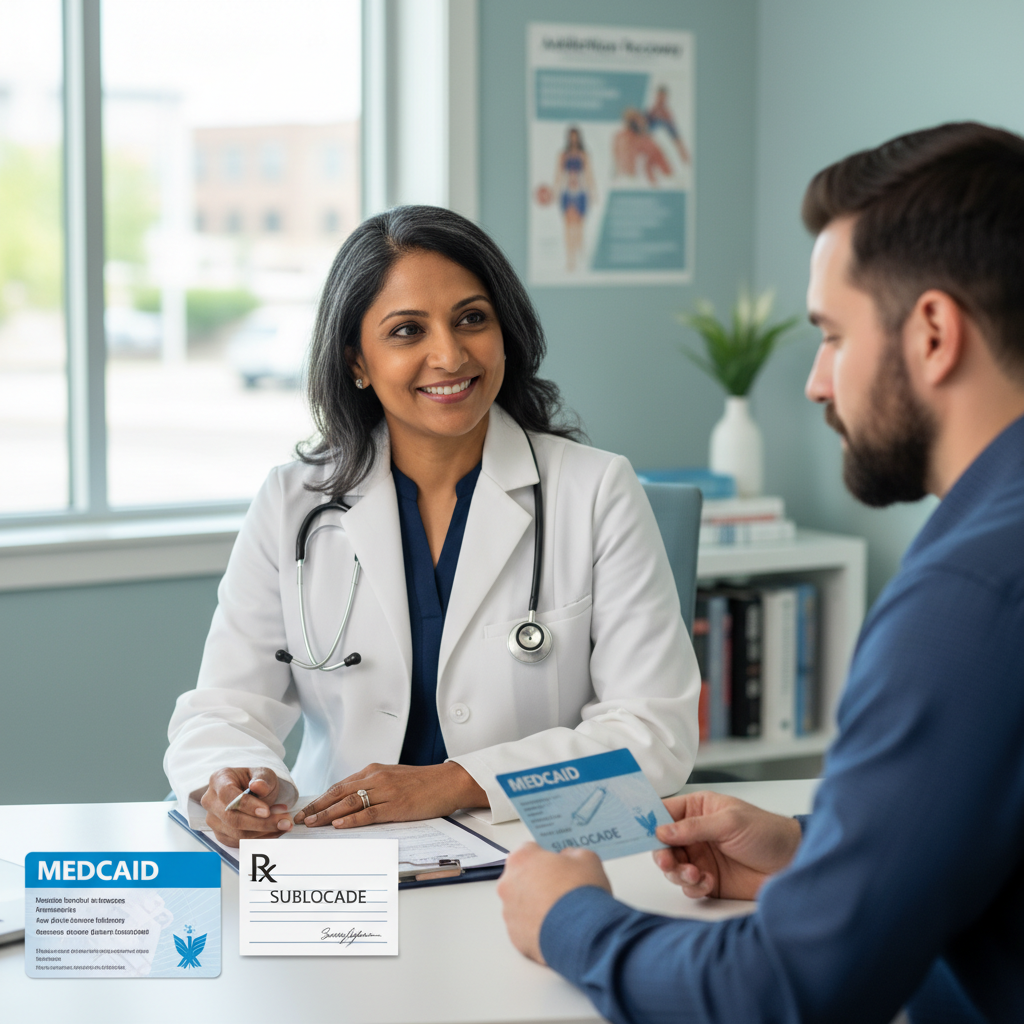
Understanding Sublocade and Medicaid
If you are looking for Sublocade doctors that take Medicaid, you are likely trying to balance two priorities at once: getting an effective, modern treatment for opioid use disorder and making sure that treatment is realistically affordable. Navigating insurance, prior authorizations, and clinic options can feel overwhelming when you are already dealing with cravings, withdrawal, or worries about relapse.
Sublocade is a once monthly injectable form of buprenorphine that is used as part of medication assisted treatment (MAT) for opioid use disorder. Because it is a prescription medication that must be given by a healthcare professional in a clinic or office, your access depends heavily on both state Medicaid rules and on finding Sublocade doctors who accept Medicaid as payment for their services.
All state Medicaid programs cover outpatient prescription drugs for eligible enrollees, and many of these programs include Sublocade on their formularies, although coverage and conditions vary from state to state [1]. Understanding how this coverage works, what to ask potential providers, and how to compare your options can help you move forward with more confidence.
For a deeper overview of coverage details, you can also review our guides on is sublocade covered by medicaid and medicaid coverage for sublocade injections.
How Sublocade treatment works
Sublocade is one form of buprenorphine treatment, but instead of taking a tablet or film every day, you receive a slow release injection once a month in a medical setting. Understanding what this looks like in real life can help you decide whether it fits your needs.
What Sublocade actually is
Sublocade is a long acting, extended release form of buprenorphine. Buprenorphine is a partial opioid agonist, which means it attaches to the same receptors in your brain that opioids activate, but it does so in a controlled way that reduces cravings and withdrawal without creating the same intense high.
With Sublocade, the medication is injected under the skin of your abdomen, where it forms a small depot that slowly releases buprenorphine into your system over about one month. This provides a steady level of medication instead of daily ups and downs. If you want a more technical breakdown of this process, you can explore how does sublocade shot work.
What a typical Sublocade program includes
Because Sublocade must be administered by a healthcare provider in a clinic, office, or hospital, it is almost always used as part of a structured treatment program. In most cases you can expect:
- An initial assessment to confirm opioid use disorder, review your history, and discuss goals
- A short period on sublingual buprenorphine (like Suboxone) to stabilize you before the first injection
- Monthly visits for injections, monitoring, and medication adjustments as needed
- Counseling, behavioral therapy, or group support integrated into your treatment plan
Sublocade is not a quick fix. It is one tool within a broader medication assisted treatment approach that includes therapy, relapse prevention planning, and medical monitoring. You can learn more about the benefits and outcomes in our resource on how effective is sublocade for addiction.
Why Sublocade and buprenorphine are growing in use
You might wonder why there is so much focus recently on Sublocade and other buprenorphine based treatments. The short answer is that these medications offer a combination of safety, effectiveness, and practicality that fits many people’s lives.
Key benefits of long acting buprenorphine
Compared with daily oral medications, long acting options like Sublocade can:
- Reduce the stress of remembering daily doses
- Lower the risk of lost or stolen medication
- Limit opportunities to misuse or divert the drug
- Provide a more stable level of medication in your body
When you only need to visit a clinic once a month, it can be easier to maintain work, family responsibilities, and privacy. This convenience is a major reason many patients and providers are turning to long acting injections instead of or in addition to daily sublingual medications.
Safety profile and monitoring
Buprenorphine has a ceiling effect on respiratory depression, which generally makes it safer than full opioid agonists when used as prescribed. However, Sublocade still carries risks and potential side effects. Because the injection slowly releases medication over weeks, you cannot simply stop or reverse it at home if you change your mind.
You should review potential reactions, injection site issues, and other safety considerations with your provider, and you can get an overview in our guide to sublocade side effects and safety. Ongoing clinic visits allow your care team to monitor you closely and adjust your overall plan as needed.
Medicaid coverage basics for Sublocade
To work successfully with Sublocade doctors that take Medicaid, it helps to understand a few core insurance concepts. Medicaid is structured differently from private insurance, and coverage is not identical across states.
How Medicaid decides whether to cover Sublocade
Each state Medicaid program maintains a preferred drug list or formulary that indicates which medications are covered and under what conditions. All state Medicaid programs cover outpatient prescription drugs in some form, and many include Sublocade on their lists, but criteria differ [1].
In many states, eligibility for Sublocade coverage may require:
- A confirmed diagnosis of moderate to severe opioid use disorder
- Meeting specific clinical criteria set by the state
- Documentation that you have tried or considered other treatments first
- Willingness to participate in a structured program that includes counseling
Your doctor’s office usually submits paperwork to request coverage, and approval is often handled through a prior authorization process.
Prior authorization and what it means for you
Prior authorization means your provider must send a request to Medicaid and receive approval before the medication is administered. This process can involve documenting your diagnosis, past treatments, and medical need for Sublocade.
Many insurers, including Medicaid plans, require prior authorization for Sublocade to control costs and ensure appropriate use [2]. This can feel like a delay, but you can use that time to complete your initial assessment, begin counseling, or stabilize on sublingual buprenorphine if needed.
For a more focused discussion of costs and insurance, you can review the cost of sublocade treatment with medicaid and medicaid coverage for sublocade injections resources.
What “Sublocade doctors that take Medicaid” actually means
When you search for Sublocade doctors that take Medicaid, you are looking for two separate but linked things: a prescriber or clinic that is authorized and willing to use Sublocade, and a practice that accepts your specific Medicaid plan.
Provider roles and settings
Sublocade must be administered by a licensed healthcare professional in a controlled setting like a doctor’s office, clinic, or hospital [1]. In practice, this usually includes:
- Addiction medicine physicians
- Psychiatrists with addiction training
- Some primary care physicians with waivers and MAT experience
- Specialized opioid treatment programs or MAT clinics
Because the injection is given at the clinic, it is your provider’s office that will bill Medicaid. This is why their participation in your specific Medicaid network is so important.
Medicaid participation vs Sublocade experience
It is possible to find a doctor who accepts Medicaid but does not prescribe or administer Sublocade. It is also possible to find an experienced Sublocade provider who only works with private insurance or cash pay.
Ideally, you want:
- A provider who participates in your state Medicaid network
- A clinic that is familiar with the Sublocade prior authorization process
- A team that is comfortable managing buprenorphine based MAT, including injections
To better understand how buprenorphine clinics work in general, you can read about buprenorphine clinic covered by medicaid and buprenorphine treatment covered by medicaid.
Real world examples of Medicaid access
Access to Sublocade doctors that take Medicaid can look different depending on where you live. The following examples show how coverage and networks function in practice.
Online and hybrid options in New Hampshire
In Nashua, New Hampshire, an online medication assisted treatment program provides access to specialists experienced in prescribing Sublocade and monitoring opioid use disorder treatment. This program offers telehealth services and can often arrange same day appointments for evaluations and follow ups [2].
For patients in Nashua:
- Sublocade is administered in a clinical setting, with once monthly buprenorphine injections and counseling
- The program helps patients secure insurance approval and lower out of pocket costs through prior authorization
- Individuals who already have a local provider can receive support with insurance handling, delivery when applicable, and financial assistance programs [2]
Patients can also be matched to nearby clinics that accept hundreds of insurance plans, including Medicaid, to ensure that they can find doctors who provide comprehensive care for opioid use disorder and accept their coverage [2].
Medicaid coverage within broader MAT networks
In Las Vegas, Nevada, there are dozens of addiction treatment centers that accept Medicaid, which illustrates how state Medicaid programs often support a range of medication assisted treatment options [3]. Facilities such as the Southwest Vegas Comprehensive Treatment Center and the Las Vegas Comprehensive Treatment Center accept Medicaid and offer outpatient MAT with medications like methadone, Suboxone, buprenorphine, and Vivitrol [3].
Medicaid typically covers outpatient treatments that may include:
- Medication assisted treatment, which can include Sublocade in some programs
- Individual counseling and group therapy
- Structured support groups and relapse prevention services [3]
Because Medicaid plans and provider networks vary by state, you are encouraged to verify your benefits directly with your plan or Medicaid customer service. This step helps confirm which clinics and medications, including Sublocade, are covered for you personally [3].
Comparing Sublocade with other Medicaid covered MAT options
Sublocade is one of several effective medications for opioid use disorder. Understanding how it stacks up against other options that are often covered by Medicaid can help you have a more informed discussion with your provider.
Sublocade vs Suboxone and other buprenorphine forms
Suboxone and similar sublingual products involve taking buprenorphine (often combined with naloxone) under your tongue every day. Sublocade replaces that daily routine with a monthly injection. Both are forms of buprenorphine, but their delivery and lifestyle fit differ.
Key considerations include:
- Daily control vs monthly set and forget dosing
- Privacy and discretion in your home vs at the clinic
- Risk of lost, shared, or misused medication at home
- How each option fits with your schedule and transportation
You can explore these differences in more depth in our sublocade vs suboxone comparison and can sublocade replace suboxone therapy resources.
Buprenorphine vs methadone and other options
Methadone, another common MAT medication, is usually dispensed daily at specialized opioid treatment programs, especially early in treatment. Buprenorphine based treatments like Suboxone and Sublocade can often be managed in office based settings with less frequent visits once you are stable.
To understand how these treatments compare in structure, safety, and daily impact, you can review buprenorphine vs methadone treatment and subutex vs buprenorphine explained. Your personal history, tolerance, and health profile will shape which option is best for you.
How to find Sublocade doctors that take Medicaid
Locating a provider that both uses Sublocade and accepts your Medicaid plan takes a bit of organization, but you can work through it step by step. Combining your own research with help from clinics and your insurer often works best.
Step 1: Confirm your Medicaid details
Before you start calling clinics, gather basic information about your coverage:
- Your state and specific Medicaid plan name
- Whether you have managed care (an HMO or similar plan)
- Your member ID and group number
Then, contact your plan or log in to your online member portal and ask:
- Is Sublocade on the formulary, and are there specific criteria for coverage?
- Are there preferred clinics or doctors for MAT or opioid use disorder treatment?
- What prior authorization process is required for Sublocade?
If needed, cross reference this with information from is sublocade covered by medicaid.
Step 2: Search for nearby MAT and buprenorphine clinics
Next, look for clinics that regularly treat opioid use disorder with MAT and accept Medicaid. You can:
- Use your Medicaid plan’s provider search tool and filter for behavioral health or addiction treatment
- Call local community health centers or FQHCs and ask about buprenorphine and Sublocade
- Contact addiction specialists or psychiatry practices and inquire about both MAT and insurance
Our guide on how to find sublocade clinic near me can give you additional strategies for locating nearby options.
When you call, be specific. Ask:
- Do you use Sublocade injections as part of treatment, and how often?
- Do you accept my specific Medicaid plan?
- Do you help with prior authorization and paperwork?
- What counseling or support services are included?
Step 3: Confirm experience with Medicaid and Sublocade
Once you identify potential providers, it is worth confirming that they are comfortable working with both Sublocade and Medicaid. Clarify:
- Whether they currently have Medicaid patients on Sublocade
- How they handle denied authorizations or appeals
- Whether they can coordinate with your existing therapist or primary care doctor
Many clinics that regularly treat Medicaid patients are familiar with the extra steps required for approval and can guide you through them. For example, some online or hybrid programs support patients by handling prior authorization, insurance questions, and coordination with pharmacies or delivery options where available [2].
Step 4: Consider alternatives and backup plans
If you struggle to find a nearby Sublocade provider that accepts Medicaid, you still have options. These may include:
- Starting with sublingual buprenorphine (like Suboxone) at a Medicaid accepting clinic, then transitioning to Sublocade later if coverage improves
- Exploring other MAT options such as methadone or naltrexone that may be more widely available in your area
- Asking your provider to help you explore patient assistance programs
The manufacturer of Sublocade provides assistance programs for patients who do not qualify for Medicaid or cannot afford treatment, and they can be contacted in the U.S. and Canada for more information [1]. These programs sometimes help bridge gaps in coverage or cost.
What to expect at your first appointment
Meeting with a Sublocade doctor that takes Medicaid is an important step, and knowing what to expect can make the process less stressful and help you get the most from your visit.
You can usually expect:
- A detailed medical and substance use history, including previous treatments
- Screening for co occurring mental health conditions such as anxiety, depression, or PTSD
- Discussion of different MAT options, including Sublocade, Suboxone, methadone, and others
- Review of risks, benefits, and expectations for each option
- Planning for counseling, relapse prevention, and support services
Your doctor may recommend starting with sublingual buprenorphine to confirm that you tolerate the medication before moving to an injection. They will also begin the prior authorization process if Sublocade is chosen, and they may ask you to sign releases so they can coordinate care with other providers as part of your Substance Abuse Treatment plan
If you feel unsure about any part of the plan, ask for clarification. You can reference this article or our related guides like how effective is sublocade for addiction to frame your questions.
You are allowed to ask directly: “How many patients on my Medicaid plan do you currently treat with Sublocade, and how does that process usually work here?”
A clear answer can help you gauge their familiarity and comfort with both the clinical and insurance sides of your care.
Moving forward with informed confidence
Finding Sublocade doctors that take Medicaid is not always simple, but it is possible in many parts of the country. By understanding how Sublocade works, how Medicaid coverage is structured, and how to ask the right questions, you can play an active role in shaping your treatment.
You do not have to figure this out alone. Use your Medicaid plan’s support line, talk openly with potential providers, and consider all buprenorphine based options, from daily medications to long acting injections. When you combine effective medication with counseling, support, and honest communication with your care team, you give yourself a stronger foundation for long term recovery.
References
- (Drugs.com)
- (Klinic)
- (Recovery.com)