Understanding Subutex vs buprenorphine explained
If you live with opioid use disorder, you have probably seen a lot of confusing names: Subutex, Suboxone, buprenorphine, Sublocade, and more. When you look up “Subutex vs buprenorphine explained,” it can feel like you are reading five different languages instead of one medication family.
At the core, Subutex and Suboxone are brand names, and buprenorphine is the active medication that actually works on your brain. Subutex was one way of delivering buprenorphine. It has been discontinued in the United States, but very similar buprenorphine-only products are still available in certain situations. Buprenorphine itself is now one of the most common and researched medications for opioid use disorder, and it is available as daily tablets or films, as long-acting injections like Sublocade, and in other forms [1].
When you understand what buprenorphine is, how Subutex fit into that picture, and how Medicaid usually approaches coverage, it becomes much easier to choose a treatment path that fits your life.
What buprenorphine is and how it works
Buprenorphine is a medication in a class called partial opioid agonists. It attaches strongly to the same mu opioid receptors in your brain that drugs like heroin, fentanyl, and oxycodone bind to, but it activates them only partially. This “partial” activation is what makes buprenorphine different and safer than full opioid agonists such as methadone, heroin, or morphine.
According to SAMHSA, buprenorphine produces weaker opioid effects like euphoria and respiratory depression than full opioids, which reduces the risk of overdose when you take it as prescribed [2]. Researchers at the National Institutes of Health describe several important features [3]:
- It binds tightly to opioid receptors, so it can block other opioids from working.
- It only partially activates those receptors, which lowers the chance of intoxication.
- It has a ceiling effect at higher doses, so increasing the dose does not keep increasing the opioid effect in a straight line, which adds a layer of safety in overdose situations [4].
In practical terms, this means buprenorphine can:
- Reduce withdrawal symptoms.
- Cut down cravings.
- Help protect you from overdose by blocking the effects of other opioids [3].
However, you usually need to start buprenorphine when you are already in mild to moderate withdrawal, typically 12 to 24 hours after your last opioid use, to avoid precipitated withdrawal. Because buprenorphine binds so tightly, it can kick full opioids off your receptors and trigger a fast, intense withdrawal if you start too early [5].
What Subutex was and how it relates to buprenorphine
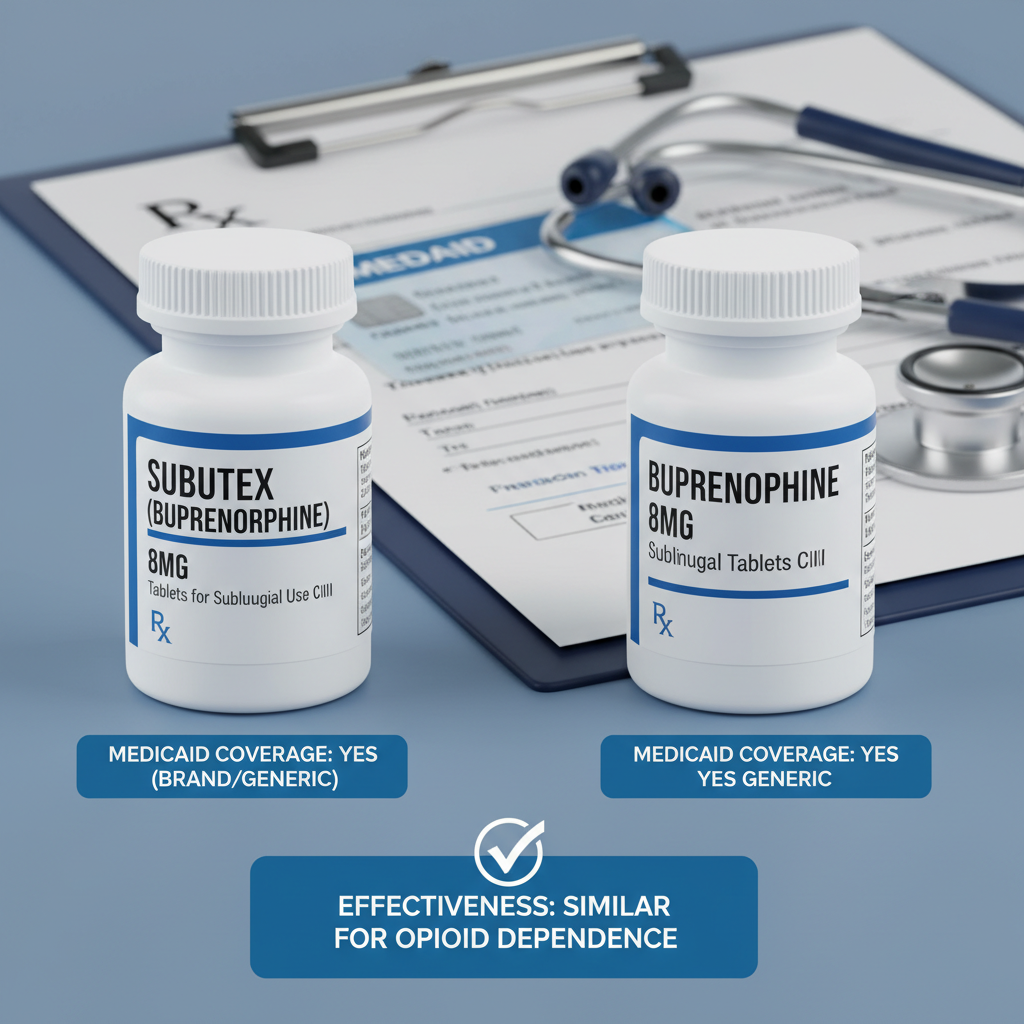
Subutex was a brand name for a sublingual (under the tongue) tablet that contained buprenorphine only. It was designed for adults with opioid use disorder and used as part of a comprehensive treatment plan that included counseling and psychosocial support [6]. In other words, Subutex was a specific buprenorphine product, not a totally different medication.
Here are a few key points about Subutex:
- It contained only buprenorphine, with no naloxone.
- It was taken as a tablet under your tongue.
- It worked by relieving withdrawal and cravings, just like other buprenorphine products [7].
Subutex was approved in 2002 and widely used for opioid use disorder. Over time, however, concerns about misuse and diversion led to a shift toward combination products, especially Suboxone, which pairs buprenorphine with naloxone as a misuse deterrent.
Subutex itself was discontinued in the US in 2011. Even so, buprenorphine-only medications that serve a similar role can still be prescribed in specific cases, such as for some pregnant patients or people with documented naloxone intolerance, although naloxone is also considered safe during pregnancy [7].
Subutex vs buprenorphine explained in simple terms
You can think of it this way:
- “Buprenorphine” is the main ingredient and the type of medication.
- “Subutex” was one brand name for buprenorphine-only tablets.
- Today, you are more likely to receive buprenorphine as:
- Buprenorphine/naloxone (like Suboxone, or generics).
- Buprenorphine-only tablets or films in certain medical situations.
- Long-acting buprenorphine injections such as Sublocade.
Both buprenorphine and Subutex have similar abuse potential, with accepted medical use and lower risk than Schedule I or II drugs, but they still carry a risk of physical or psychological dependence if misused [6].
On Drugs.com, users rate Subutex somewhat higher than buprenorphine in general, with Subutex scoring 8.5 out of 10 based on 146 reviews and buprenorphine at 6.7 out of 10 based on 1,173 reviews, though both show a majority of positive experiences [6]. These are self-reports, so they can reflect personal preference, access, and how each product was used, but they suggest that, for many people, buprenorphine-only formulations can feel very effective.
Both buprenorphine and Subutex have many potential drug interactions, with 743 interacting medications noted for each on Drugs.com, so you should always review your medication list with your prescriber [6].
How Suboxone fits into the picture
If you are comparing Subutex vs buprenorphine explained, you will almost always see Suboxone mentioned too, because it is now the most common buprenorphine product used in office-based treatment for opioid use disorder.
Suboxone combines:
- Buprenorphine, the partial opioid agonist that eases withdrawal and cravings.
- Naloxone, an opioid antagonist that is poorly absorbed under the tongue but active if injected or snorted.
When you take Suboxone as prescribed under the tongue, buprenorphine is absorbed and naloxone has little to no effect. If you try to misuse it by injecting or snorting, naloxone can trigger precipitated withdrawal, which discourages improper use [8].
Both Suboxone and Subutex work by buprenorphine binding strongly to mu opioid receptors, partially activating them to calm withdrawal and cravings while blocking the effects of stronger opioids like heroin or fentanyl [9].
Suboxone is often preferred over buprenorphine-only products because it is less likely to be misused and is widely covered by payers when paired with counseling and support, which is considered best practice for treatment [7].
If you want to see how another long-acting option, Sublocade, compares to Suboxone, you can explore the detailed sublocade vs suboxone comparison.
Sublocade as long-acting buprenorphine
Sublocade is a monthly, extended-release injection that delivers buprenorphine slowly over 4 weeks. Instead of taking a tablet or film daily, you get a shot in the abdomen from a trained prescriber. The medication forms a deposit under your skin that gradually releases buprenorphine into your bloodstream.
This option is still buprenorphine treatment, but in a long-acting form. Studies and clinical experience show that buprenorphine injections like Sublocade are effective for reducing opioid use and keeping people in treatment, especially once you have stabilized on a daily dose first [3]. You usually need to be on a stable dose of sublingual buprenorphine for at least 7 days before transitioning to Sublocade, so your prescriber can gauge your response and minimize the risk of withdrawal.
If you want more detail on how this shot works inside your body and what to expect, review how does sublocade shot work. For information about real-world outcomes and relapse prevention, see how effective is sublocade for addiction.
Effectiveness of buprenorphine compared with other treatments
When you consider medication options, you might wonder how buprenorphine stacks up against methadone or naltrexone.
A large review funded through the National Institutes of Health found that:
- Buprenorphine is the most widely prescribed medication for opioid use disorder because it can be prescribed in regular medical offices under the Drug Addiction Treatment Act of 2000 (DATA 2000), which increases access compared with methadone clinics [10].
- Compared to methadone, people on buprenorphine have slightly lower treatment retention overall, but among people who stay in care, opioid abstinence rates are similar. Higher buprenorphine doses of 16 milligrams per day or more are associated with better retention and reduced use, which shows how important adequate dosing is [3].
- Buprenorphine is modestly superior to extended-release injectable naltrexone at preventing relapse and treatment dropout, mainly because it is easier to start. About 27 percent of people assigned to injectable naltrexone never manage to start the medication, while almost all those assigned to buprenorphine successfully begin treatment [3].
If you want a focused comparison of buprenorphine and methadone, including pros and cons for each, you can read more at buprenorphine vs methadone treatment.
Safety and risks you should know about
Like any opioid medication, buprenorphine has risks, but its pharmacology gives it a safer profile than full opioid agonists when it is used correctly.
Key safety points include:
-
Partial agonist and ceiling effect
The partial-agonist action and plateau in effect at higher doses mean that dose increases do not endlessly increase respiratory depression, which lowers the risk of fatal overdose compared to drugs such as methadone or morphine [4]. -
Overdose risk
Overdose is still possible, especially if you mix buprenorphine with other sedating drugs like benzodiazepines, alcohol, or certain sleep medications. Both buprenorphine and Subutex have many known drug interactions, so any new prescription or over-the-counter medication should be checked against your buprenorphine regimen [6]. -
Precipitated withdrawal
If you start buprenorphine while full opioids are still strongly active in your system, buprenorphine can kick them off the receptors without providing equivalent activation. This can cause abrupt, intense withdrawal symptoms, known as precipitated withdrawal. To avoid it, you usually start when you have already begun to feel withdrawal on your own [5]. -
Pregnancy considerations
Both buprenorphine and methadone are considered first-line treatments for pregnant and breastfeeding women with opioid use disorder. Research suggests that staying on medication during pregnancy is safer than going through withdrawal. Some guidelines allow buprenorphine-only products or buprenorphine/naloxone in pregnancy, and current evidence supports continuing appropriate MAT throughout pregnancy to protect both you and your baby [11].
For people exploring Sublocade, it is also important to understand side effects, injection-site issues, and practical safety considerations. You can find more detail in sublocade side effects and safety and sublocade injection for opioid treatment.
Medicaid coverage for buprenorphine and Sublocade
If you are covered by Medicaid, you are likely asking a different version of “Subutex vs buprenorphine explained”: which forms of buprenorphine will Medicaid help pay for, and what will treatment actually cost you month to month?
Medicaid programs are state-based, so details vary. In general:
- Most state Medicaid plans cover buprenorphine for opioid use disorder, either as buprenorphine/naloxone combinations or as buprenorphine-only products in specific circumstances.
- Many require prior authorization, proof of diagnosis, and sometimes documentation of counseling or participation in a broader treatment program.
- Coverage for long-acting injections such as Sublocade is growing, but it is usually handled as a medical benefit and often involves additional authorization steps.
To get a clearer picture of what your plan covers, and what you might owe in copays or cost sharing, you can review:
-
Buprenorphine treatment covered by medicaid
for an overview of how buprenorphine visits and prescriptions typically get billed and paid. -
Buprenorphine clinic covered by medicaid
if you want to connect with a clinic that already works with Medicaid and understands your state rules.
For Sublocade specifically, you can find targeted information here:
- Is sublocade covered by medicaid
- Medicaid coverage for sublocade injections
- Cost of sublocade treatment with medicaid
These resources can help you estimate what part of the cost Medicaid will pay and what you might owe, as well as how to navigate prior authorization and required documentation.
In many states, buprenorphine is covered under the pharmacy benefit while Sublocade is covered as a clinic-administered injection, which means you may have different copays and approval processes for each.
If you are already on Suboxone or another daily buprenorphine product and you are wondering whether long-acting injections could realistically replace it for you, you can explore can sublocade replace suboxone therapy.
Choosing between buprenorphine options in real life
When you sit down with a prescriber, you are not just choosing between “Subutex vs buprenorphine.” You are really choosing among several forms and settings of buprenorphine treatment that can fit your life in different ways.
Questions that can guide your decision include:
- Do you want a daily routine or a monthly injection?
- How comfortable do you feel managing medication at home?
- What has your past experience with withdrawal and cravings been like?
- How strong is your risk of misusing or diverting medication, based on your own history?
- What does your Medicaid plan cover most easily in your state?
Buprenorphine monoproducts may still be considered for you if you are pregnant, have a proven allergy or intolerance to naloxone, or have other specific medical reasons. For most people, combination products like Suboxone are preferred because they are safer from a misuse perspective and are widely accepted in Medicaid formularies [7].
Long-acting injections like Sublocade may be a good match if:
- You prefer not to think about medication every day.
- Your work, family responsibilities, or living situation make daily dosing hard.
- You want more protection from relapse during high-risk times.
If you are interested in moving toward injections, you can look up sublocade doctors that take medicaid or use the directory at find sublocade clinic near me to locate a provider who can walk you through your options and verify your coverage.
Taking the next step
Understanding Subutex vs buprenorphine explained is really about seeing that Subutex was one chapter in a larger story. The core medication, buprenorphine, continues to be one of the most studied and accessible tools for opioid use disorder, with daily tablets and films, long-acting injections like Sublocade, and flexible office-based prescribing that can meet you where you are [1].
Your next step can be as simple as:
- Confirming what your Medicaid plan covers using the resources on buprenorphine treatment covered by medicaid and medicaid coverage for sublocade injections.
- Reaching out to a buprenorphine clinic covered by medicaid or a sublocade doctors that take medicaid provider to schedule an intake.
- Talking through your history, your goals, and your day-to-day life so you can choose a buprenorphine option that supports not just relief from withdrawal, but a sustainable path forward.
With the right medication, coverage, and support, you can use these modern MAT options as tools, not life sentences, on your way to stability and long-term recovery.