
According to the National Institute on Drug Abuse, relapse rates for substance use disorders run about 40 to 60 percent. That number sounds harsh until you understand what relapse prevention strategies in mat program settings are actually built to do: manage a chronic medical condition before a setback turns into dropout, overdose, or another lost month. If you are in treatment for opioid use disorder, relapse prevention is not about trying harder. It is about building a system that keeps you medicated appropriately, connected to care, prepared for triggers, and able to return fast if use happens.
In plain English, relapse prevention in medication-assisted treatment means reducing the chances that cravings, stress, trauma, or life disruption pull you back into opioid use. MAT uses medications such as methadone, buprenorphine, or extended-release naltrexone to stabilize brain and body function, then strengthens that stability with counseling, structure, and follow-up. The move that works is not white-knuckling. It is staying engaged long enough for treatment to do its job.
What you will learn in this guide:
- What relapse means in MAT
- Why opioid relapse turns dangerous quickly
- How medication choice and dose affect risk
- Which triggers matter most in daily life
- Which counseling approaches have the best evidence
- How to build a personal relapse plan
- How family support helps when done right
- Why access barriers cause preventable relapse
- What to do immediately after a lapse or relapse
Why relapse prevention matters more in MAT than willpower ever will
NIDA describes addiction as a treatable chronic disorder, not a moral failure or lack of character. That changes everything. If you treat opioid use disorder like a test of willpower, every craving feels like weakness and every setback feels final. If you treat it like a chronic medical condition, relapse becomes a warning signal that treatment needs adjustment.
That framing matters because opioid use disorder does not respond well to shame. It responds to consistent medical care, adequate medication, and fast re-engagement when symptoms flare. NIDA also notes that relapse rates for addiction are similar to rates seen in hypertension and asthma, both commonly cited in the 50 to 70 percent range. What this means in practice is simple: recurrence of symptoms is not proof that treatment failed. It is proof that ongoing treatment is necessary.
In a MAT program, relapse prevention means more than avoiding drug use. It means keeping medication active in your life, staying connected to appointments, spotting early warning signs, and having a clear response plan for high-risk moments. The simplest version of this is not heroic. It is repeatable.
Your action for this section: stop measuring recovery by perfection and start measuring it by engagement. If you stay in care, treatment can be adjusted. If you disappear, risk climbs fast.
What relapse actually means in a MAT program
A relapse is a return to problematic substance use after a period of improvement or abstinence. In MAT, that definition needs more nuance because not every setback means the same thing. A single use episode, a week of escalating cravings, missed doses, treatment dropout, and overdose risk are related, but not identical.
A lapse is a brief return to use. A relapse is a more sustained return to a pattern that threatens safety and stability. Treatment dropout means you are no longer getting medication, counseling, monitoring, or support, which often creates more danger than the use itself. Overdose risk is its own emergency, especially with fentanyl in the supply.
The core message is direct: relapse is a treatment signal. It calls for a fast clinical response, not discharge, humiliation, or punishment. That is why a dignity-centered MAT program treats return to care as continuation of recovery, not starting over.
If shame is already kicking in, read more about getting past the immediate self-blame after a setback. Shame delays treatment. Delay is what turns a setback into a crisis.
The action here is to use accurate language. If use happens, report it as data to your treatment team. Precision beats secrecy every time.
The three stages of relapse: emotional, mental, and physical
Relapse usually starts before drug use begins. That stage model matters because it gives you a chance to intervene early.
Emotional relapse comes first. You are not using, and you may not even be consciously thinking about using, but the warning signs are there: poor sleep, irritability, isolation, bottling things up, skipping meals, canceling counseling, and acting like everything is fine when it is not. The problem is loss of stability.
Mental relapse comes next. Part of you wants recovery and part of you wants relief right now. You start bargaining. One time will not matter. You romanticize old use, reconnect with risky people, or begin planning without admitting it.
Physical relapse is the act of using.
Here is how to use this framework: catch the problem at the emotional stage. If you wait until you are arguing with yourself about using, the risk is already high. Your action is to name the stage out loud. “I am in emotional relapse” is more useful than “I am just stressed.”
Why opioid relapse gets dangerous fast
The Centers for Disease Control and Prevention and NIDA have repeatedly emphasized the danger of fentanyl contamination in the opioid supply. That means returning to use after even a short gap carries a high overdose risk. Lowered tolerance makes the situation worse. If medication has been stopped or missed, your body no longer handles opioids the way it did before.
This is why opioid relapse is not just disappointing. It is medically dangerous. After detox, jail, hospitalization, or a self-directed taper, overdose risk rises sharply because tolerance falls while street potency stays unpredictable.
Immediate re-engagement in care is the move that works. If use happens, the priority is not to hide it. The priority is overdose safety, medication review, and getting back into treatment without delay.
Your action: treat any return to opioid use after a break as an emergency-level treatment issue, even if it seems small.
How MAT prevents relapse when the program is built correctly
According to NIDA and the Substance Abuse and Mental Health Services Administration, methadone, buprenorphine, and extended-release naltrexone are evidence-based medications for opioid use disorder. Each works differently, but the purpose is the same: reduce cravings, stabilize withdrawal, and lower the pull of illicit opioid use.
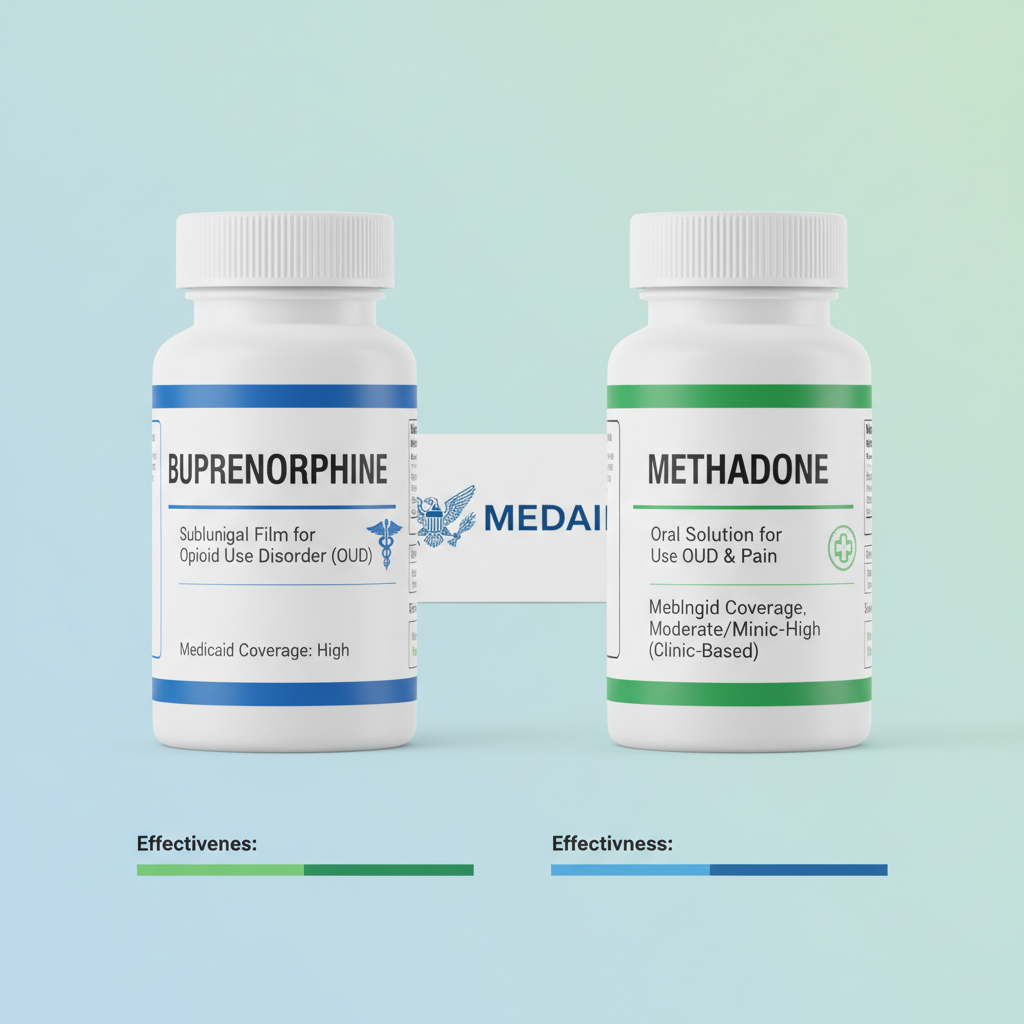
Methadone is a full opioid agonist that prevents withdrawal and cravings when dosed correctly. Buprenorphine is a partial agonist that strongly reduces cravings and has a ceiling effect that improves safety. Extended-release naltrexone is an opioid blocker that prevents opioids from producing euphoric effects, but it requires a full opioid-free period before starting.
MAT outperforms abstinence-only care for opioid use disorder because it treats the biology driving relapse. One source in the research set reports 49 percent success for MAT compared with 7 percent for abstinence-based treatment. Another reports average retention of 438.5 days in MAT versus 174 days in abstinence programs. What this means in practice is blunt: treatment works better when your brain and body are not fighting untreated opioid dependence every day.
Your action in this section is to view medication as first-line treatment, not a last resort.
Medication is the floor, not the full plan
Medication creates stability. It does not automatically teach you what to do with stress, trauma, insomnia, conflict, or old routines. That is why good MAT is whole-person care.
Counseling, recovery skills, case management, family work, and practical problem-solving turn symptom control into relapse prevention. Without that layer, you may feel physically better but still fall into the same high-risk loops. With that layer, you start recognizing patterns before they take over.
Here is how to use it: keep medication constant and build skills around it. Do not treat counseling as optional cleanup work after the “real” treatment. It is part of the real treatment.
Why staying in treatment is one of the strongest relapse prevention strategies
Retention is not just an administrative metric. It is protection. The research in this brief shows much longer average treatment retention in MAT than in abstinence-based care, and longer retention tracks with better opioid-free outcomes.
That makes sense. Every additional week in treatment gives you more medication stability, more contact with support, more chances to catch early relapse signs, and fewer untreated days. The most dangerous pattern is not one bad day. It is drifting out of care and losing the safety net.
If you miss an appointment or fall off track, the right move is to return immediately. A helpful place to start is understanding the practical path back into care after a setback.
Your action: treat attendance itself as relapse prevention, not as paperwork.
The medication strategy that actually protects you: right medication, right dose, long enough
Under-dosing, inconsistent access, and rushed tapers drive cravings and dropout. That is one of the biggest failures in opioid treatment, and it is fixable.
A medication plan prevents relapse when it fits your life, controls symptoms, and lasts long enough for stability to hold. If you are still waking up in withdrawal, counting hours to the next dose, or obsessing about using, that is not proof you are failing treatment. It is proof your treatment plan needs adjustment.
The action here is direct: judge medication by outcomes. Are cravings lower? Is illicit opioid use dropping? Are you staying in care? If not, the plan needs work.
Methadone, buprenorphine, and naltrexone: when each option fits best
Methadone often fits best when opioid tolerance is high, fentanyl exposure is heavy, or repeated relapse has continued despite other approaches. It is usually provided through certified opioid treatment programs, which adds structure and daily accountability.
Buprenorphine often fits best when you need more flexibility. Office-based prescribing and telehealth access can make treatment easier to maintain if you work, parent, attend school, or have transportation barriers.
Extended-release naltrexone fits best when you have already completed opioid withdrawal and want a blocking medication rather than an opioid agonist. The catch is the opioid-free period before starting. That hurdle stops many people from getting onto it successfully.
Here is how to use this: pick the medication that gives you the highest chance of staying engaged, not the medication that sounds best on paper.
Adequate dosing reduces cravings and treatment dropout
Research summarized in this brief points to methadone doses of 80 to 120 mg and buprenorphine doses of 16 to 24 mg as more effective ranges for many patients than lower doses. That does not mean every person needs the same number. It means low dosing often leaves symptoms untreated.
Untreated symptoms lead to predictable outcomes: persistent cravings, supplemental street opioid use, frustration with treatment, and dropout. Adequate dosing improves craving control, reduces illicit use, and improves retention.
What this means in practice: if cravings remain active, ask for a dose review rather than assuming you just need more willpower. The right dose is a relapse prevention strategy.
Why tapering too early often leads to relapse
NIDA has long warned that detoxification alone is not treatment. Stopping medication before stability is established leaves the underlying disorder untreated, and relapse often follows fast. That risk is even higher with fentanyl exposure, repeated relapse history, pregnancy, postpartum stress, or re-entry after incarceration.
Long-term maintenance is evidence-based care. It is not “being stuck.” It is using the treatment length that keeps you alive and functioning. The pressure to taper usually comes from stigma, impatience, or the false idea that medication means you are not really in recovery.
Your action: do not set taper timelines based on discomfort with medication. Set them, if at all, based on sustained stability.
The trigger map you need: what drives relapse in real life
Relapse rarely begins with one bad decision. It starts with a stack of pressures that becomes hard to manage all at once. Treatment research repeatedly points to the same trigger categories: stress, trauma, sleep problems, pain, isolation, conflict, certain people and places, and untreated mental health symptoms.
A trigger map makes relapse less mysterious. Instead of asking, “Why did this happen again?” you start asking, “What sequence pushed risk up?” That shift matters because you can respond to patterns.
Your action is to map the last high-risk moment in detail. Look for the chain, not the single event.
Internal triggers: cravings, mood shifts, pain, and exhaustion
Internal triggers are physical and emotional states that raise risk even when your environment looks unchanged. Cravings are obvious, but mood swings, depression, anger, untreated pain, hunger, and exhaustion can be just as powerful.
If you can name the state, you can respond before it escalates. “I am exhausted and angry” gives you options. “I am fine” keeps you blind until the urge gets louder.
What this means in practice: track one internal signal daily, usually sleep or cravings, because both change early.
External triggers: people, places, money, phones, and routines
External triggers are often concrete and predictable. Dealer contacts saved in your phone. Payday cash. Driving past the same block. Certain social media accounts. Arguments at home. Unstructured time after work.
Removing friction points ahead of time makes relapse prevention easier because you stop relying on in-the-moment self-control. Delete numbers. Change routes. Limit cash access if payday is risky. Replace the empty hour that usually turns dangerous.
Your action here is to remove one external trigger today, not after the next close call.
The counseling approaches in MAT with the strongest relapse prevention evidence
The best counseling in MAT is practical. It gives you something to do when cravings, impulsive choices, shame, or stress hit hard. Therapy is not there to make you sound insightful. It is there to change what happens at 7:30 p.m. when your brain starts pushing for relief.
The research base is strongest for approaches such as CBT, contingency management, motivational enhancement, trauma-informed therapy, family therapy, and twelve-step facilitation as a support option. The best fit depends on what keeps derailing treatment.
Your action: choose counseling based on the problem you need solved, not on what sounds most impressive.
CBT helps you interrupt the thought-behavior loop
Cognitive behavioral therapy works because it breaks the chain between trigger, thought, urge, and action. If stress leads to “I can’t do this” and that leads to using, CBT teaches you to intervene at the thought level before behavior follows.
Here is how to use it: write one replacement thought you can actually believe. Not “everything is great.” Something usable, such as “this urge peaks and passes” or “using turns one bad hour into a worse week.” Scripted responses beat vague intentions.
Contingency management is one of the most effective tools available
Research in the brief notes that contingency management can double abstinence rates compared with standard treatment. That is strong evidence, and the mechanism is simple. Immediate rewards make treatment attendance and drug-free behavior easier to repeat.
People often resist this idea because rewards sound childish. That misses the point. Opioid use powerfully rewards the brain in the short term. Recovery support needs short-term reinforcement too.
Your action: use a treatment setting that reinforces attendance and progress instead of assuming motivation should be enough.
Motivational enhancement and trauma-informed therapy improve follow-through
Motivational enhancement therapy helps when part of you wants recovery and part of you wants relief. It strengthens commitment without turning treatment into an argument. Trauma-informed therapy matters because trauma reactions often drive avoidance, shutdown, distrust, and dropout.
This is especially important if shame keeps pulling you away from appointments after a lapse. The right therapy does not excuse dangerous behavior. It removes the barriers that keep you from using treatment well.
Your action is to say the ambivalence out loud in counseling instead of hiding it. Hidden ambivalence drives relapse.
Mindfulness-based relapse prevention as a practical add-on
A 2026 clinical trial, NCT05042388, enrolled 105 patients with opioid use disorder and tested treatment as usual against treatment as usual plus mindfulness-based relapse prevention. The goal was improving medication adherence and reducing drug use over three months after discharge. MBRP is still best described as a promising adjunct, not standard first-line care, but the idea is useful right now.
Urge surfing sounds abstract until you try it. A craving rises, peaks, and falls. If you notice it without obeying it, you create space between urge and action.
The action: practice one minute of noticing, not fighting, the next craving. That one minute is often enough to reconnect with your plan.
Your personal relapse prevention plan inside a MAT program
A useful relapse plan is short enough to use and specific enough to work. It includes your warning signs, trigger pattern, medication schedule, counseling schedule, emergency contacts, transportation backup, and the exact first step to take within the first hour of craving or use.
This is where education becomes protection. If the plan only lives in your head, it fails under stress. If it is written, saved in your phone, and shared with your program or family support, it becomes usable.
Your action: build the plan before the next high-risk moment, not during it.
Build an early-warning system before a crisis starts
The best plans catch drift early. Warning signs are usually ordinary: missed appointments, sleep disruption, irritability, isolation, skipped doses, money secrecy, and thoughts like “one time will not matter.”
You do not need a long list. You need the signs that show up first for you. Once those appear, your plan should tell you what happens next, automatically.
The action here is to choose three early signs and write them down in the order they usually appear.
Write one response for cravings that you can use anywhere
Forget a long checklist in the middle of a craving. One repeatable script works better: pause, move, contact, medicate as prescribed, and get to safety. In plain language, that means stop what you are doing, change location, call your treatment contact or support person, take medication exactly as directed if a dose is due, and stay away from money, dealers, and isolation.
That script works because it interrupts momentum. Cravings feed on secrecy and stillness. Movement and contact break the spell.
Your action: save a one-sentence craving response in your notes app and pin it.
Plan your first 24 hours after a lapse
Speed matters more than guilt. Contact your MAT program. Restart support the same day. Review your medication plan. Remove overdose risk by avoiding using alone, accessing naloxone, and getting immediate medical guidance if fentanyl exposure is possible.
Do not wait to “get yourself together” before returning. That waiting period is where overdose and dropout happen. If you need more guidance, this step-by-step breakdown of what to do right after opioid relapse gives the sequence clearly.
Your action is to write down who you will call first, within 60 minutes of any lapse.
The daily habits that lower relapse risk between appointments
Daily routine matters because most relapse risk accumulates between formal treatment contacts. Small habits stabilize the nervous system and reduce cue-driven behavior. That sounds less dramatic than a breakthrough session, but honestly, ordinary structure prevents a lot of chaos.
Sleep, meals, movement, medication consistency, and fixed routines all reduce the number of high-risk windows in your day. Recovery often looks boring from the outside. That is a good sign.
Your action: protect the part of the day where relapse usually starts.
Protect sleep because cravings get louder when you are exhausted
Sleep loss wrecks impulse control, mood, and pain tolerance. When you are exhausted, cravings feel more urgent and coping gets worse. That is not a character problem. It is how the brain works under strain.
Here is the simplest version of this: keep one fixed sleep anchor, the same wake time every day. A stable wake time helps reset the whole day faster than chasing the perfect bedtime.
Use routine to shrink decision fatigue
Decision fatigue fuels relapse because every unplanned hour creates more room for impulsive choices. Fixed wake times, dosing times, work blocks, childcare timing, and meal timing reduce that friction.
Stability is not vague wellness language. It is a practical schedule that leaves fewer gaps for cravings to take over. Your action is to lock in one daily sequence, especially the hours before your highest-risk time.
Family support can reduce relapse risk when it is structured correctly
Family involvement helps when it improves treatment attendance, communication, accountability, childcare, transportation, and medication adherence. It hurts when it becomes surveillance, chaos, rescue without treatment, or constant conflict.
The point is not to make your family your counselor. The point is to make home less destabilizing and more aligned with care. For parents, teens, couples, and multigenerational households, that shift changes outcomes.
Your action: define one support role clearly instead of asking for “more help.”
What helpful support looks like versus enabling
Helpful support protects treatment and safety. Enabling removes consequences while treatment stays unchanged. Paying for transportation to clinic is support. Giving cash that goes straight to drugs is enabling. Watching children during counseling is support. Covering up a relapse while refusing to call the program is enabling.
Plain language helps here because vague family advice creates resentment. Helpful support points you back toward treatment. Enabling helps you avoid treatment.
The action is to assign one family member one job, such as rides, reminders, or childcare, and stop there.
Family therapy and recovery education improve the home environment
Family-based approaches reduce conflict, clarify expectations, and create steadier routines. That matters even more when your home has unresolved trauma, mistrust, or repeated crises around substance use.
Recovery education helps families understand that return to treatment after relapse is continuation, not fraud. Family therapy helps turn that understanding into better daily behavior. The action here is to bring one family support person into one treatment conversation this month.
Access is a relapse prevention strategy: telehealth, transportation, and flexible care
Practical barriers cause relapse when they interrupt medication or counseling. Missing care because of work, childcare, transportation, court obligations, or distance is not a motivation problem. It is an access problem, and access problems need operational fixes.
Research highlighted in the brief shows that telehealth, office-based buprenorphine, take-home medication options, reminder systems, and rapid follow-up can improve adherence and reduce dropout. Easier access is not a luxury. It is part of the treatment effect.
Your action: identify the barrier that makes you miss care most often and solve that one first.
Telehealth and office-based buprenorphine make staying in care easier
Telehealth and office-based prescribing reduce the burden of staying in treatment, especially if you work hourly shifts, parent young children, or live far from care. In a state like Maryland, where access needs vary by region, flexible delivery keeps treatment realistic.
That matters for relapse prevention because each missed visit increases the odds of medication interruption and disengagement. Convenience is not the point. Continuity is the point.
The action: use remote follow-up whenever it keeps you from missing care.
Take-home medication, reminder systems, and rapid follow-up reduce dropout
Lower-burden treatment options keep you connected. Take-home medication reduces repeated travel demands when clinically appropriate. Reminder systems prevent no-shows that start a larger slide. Rapid follow-up after missed visits pulls you back before the gap widens.
Strong programs do not punish missed appointments with silence. They reach back quickly. That is what retention-focused care looks like.
Your action is to set one automated reminder for every appointment and every medication refill date.
Relapse prevention for higher-risk situations and life stages
Relapse prevention gets stronger when your plan matches your daily reality. Pregnancy, postpartum recovery, re-entry from incarceration, adolescence, and early adulthood each bring different risks. A generic plan misses those pressures.
Tailored care is not special treatment. It is accurate treatment. The same disorder shows up differently across life stages and environments.
Your action: make sure your treatment plan reflects the life stressor most likely to destabilize you right now.
Pregnancy and postpartum care require tighter follow-up, not treatment disruption
Pregnancy and postpartum periods carry high risk if treatment is interrupted. Medication continuity, prenatal coordination, and close postpartum support protect both health and stability. Non-punitive care matters because fear of judgment often keeps pregnant patients from being honest about symptoms or use.
The move that works is tighter follow-up, not forced disruption. Your action is to keep medication and obstetric care coordinated on the same timeline.
Justice-involved adults need re-entry planning before release
The period right after incarceration is one of the highest-risk windows for overdose and relapse because tolerance has dropped and stress is high. Re-entry planning must start before release, with medication continuation, an appointment already scheduled, and transportation arranged.
Release day is too late to build the plan. Your action is to have the first treatment contact and travel plan confirmed before you walk out.
Teens and young adults need family structure and developmentally appropriate care
Younger patients face different pressures: peer influence, school stress, privacy issues, family conflict, and rapidly changing routines. MAT-compatible care for teens and young adults works best when family structure is present without turning into constant control.
The action: build treatment around school, home, and peer realities instead of pretending adult schedules and motivators apply.
What to do immediately if relapse happens
If relapse happens, act fast. Contact the MAT program immediately, assess overdose risk, review medication, and tighten follow-up. Do not disappear. Do not wait for shame to fade. Do not assume one bad day means treatment is over.
A relapse is dangerous, but the shame spiral after relapse is what often keeps the danger going. Returning to care is not starting over. It is the next clinical step in managing a chronic condition.
Your action is simple: reach out the same day.
The fastest path back to stability
Tell your treatment team the truth. Assess overdose risk, especially if fentanyl exposure is possible or tolerance has dropped. Confirm the next medication step. Increase support for the next several days.
That is the fastest path back to stability because it addresses both immediate safety and the treatment gap that made relapse more likely. If you need help thinking beyond the first crisis response, this guide to rebuilding stability after a setback lays out the longer view.
What your treatment plan should change after relapse
After relapse, treatment often needs stronger supports. Dose review. More frequent visits. Trigger review. Counseling intensity. Contingency management. Family involvement. Transportation support. These are normal medical adjustments, not punishments.
A good program expects to make changes after a setback. A bad program treats relapse as disobedience. Your action is to leave any relapse discussion with one concrete treatment change scheduled, not just a warning.
How to choose a MAT program with relapse prevention built in
A strong MAT program is built to keep you engaged long term. That means fast access, medication options, adequate dosing, good counseling, practical support, family involvement when helpful, and a clear pathway back after missed visits or relapse.
Marketing language is cheap. Relapse prevention shows up in operations. Can you start quickly? Is Medicaid accepted? Is telehealth available? Are setbacks met with support or punishment? Those questions tell you more than slogans ever will.
Your action: choose a program based on how it handles real-life instability, not just how it describes recovery.
Questions to ask before you enroll
Ask which medications are offered, how quickly treatment starts, whether Medicaid is accepted, whether telehealth is available, how missed visits are handled, and what happens if use occurs during treatment.
Those questions expose whether the program is designed for retention or for appearance. The right answer is not perfection. The right answer is a clear plan to keep you in care.
Signs a program is set up to keep you engaged long term
Look for same-week access, individualized medication plans, trauma-informed staff, practical support, and explicit re-engagement policies after setbacks. Those are the signs that a program understands relapse prevention as a clinical process, not a disciplinary issue.
That is what changes outcomes. Not slogans. Systems.
What to try this week
Write your first-hour relapse response plan and save the clinic number in your phone today. Keep it short: who you call, where you go, how you avoid using alone, and how you get back on track with medication and follow-up. That one page gives you something most people never have in the exact moment they need it, a clear move when panic, shame, and craving all hit at once.