
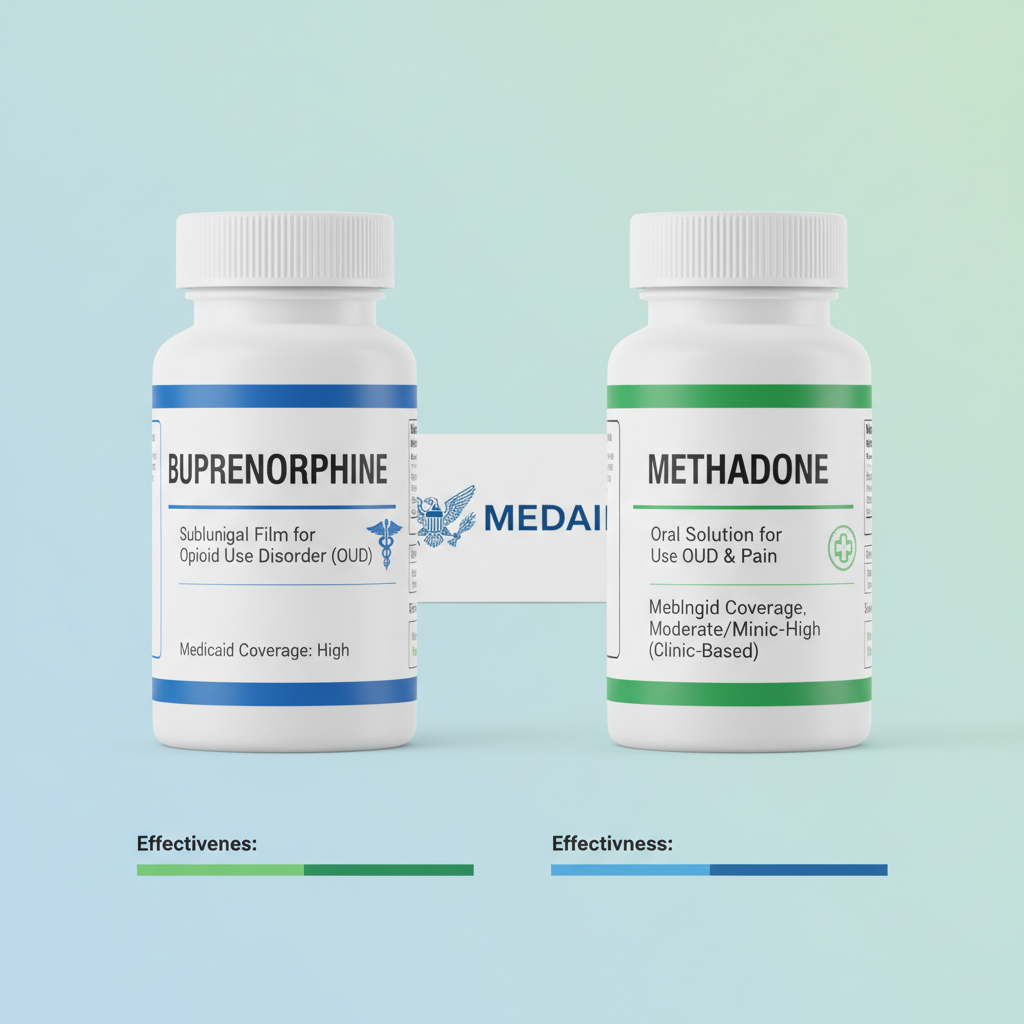
Understanding buprenorphine vs methadone treatment
If you are exploring opioid addiction treatment, you have probably heard a lot about buprenorphine and methadone. Both medications are used in medication assisted treatment (MAT) to reduce withdrawal symptoms, cut cravings, and help you rebuild stability in your daily life. Both are backed by decades of research and are considered gold standard care for opioid use disorder.
At the same time, buprenorphine vs methadone treatment can feel very different in real life. They work differently in your body, have different safety profiles, and are usually delivered in different kinds of programs. Newer options like monthly buprenorphine injections, such as Sublocade, are also changing what treatment can look like.
This guide walks you through how each medication works, where they are similar, where they differ, and how to think about Medicaid coverage so you can decide what fits best with your goals and lifestyle.
How buprenorphine and methadone work in your body
Both buprenorphine and methadone act on the same opioid receptors in your brain that drugs like heroin, fentanyl, and prescription pain pills act on. The difference is in how strongly they activate those receptors and how that affects your risk and your day to day experience.
What methadone does
Methadone is a full opioid agonist. This means it fully activates the opioid receptors.
In practice, that means:
- As your dose goes up, opioid effects also go up.
- At the right dose, methadone stops withdrawal and cravings without making you feel high.
- At too high of a dose, the risk of sedation and breathing problems increases.
Methadone has been used to treat opioid addiction since the 1940s and has one of the strongest research bases in addiction medicine. A large Cochrane Review that combined data from 31 high quality trials with 5,430 participants found that methadone treatment has superior patient retention compared to buprenorphine when used for opioid use disorder [1]. For many people, staying in treatment is closely tied to staying alive and moving forward in recovery.
What buprenorphine does
Buprenorphine is a partial opioid agonist. It activates the opioid receptors, but only up to a certain point. This ceiling effect is one of the key reasons it is considered safer than full agonists.
Here is what that means for you:
- At low doses, buprenorphine eases withdrawal and cravings.
- As the dose increases, its opioid effect plateaus. Beyond a certain point, you do not get a stronger effect, which lowers the risk of overdose and severe respiratory depression.
- Because of this, buprenorphine has a lower risk of fatal overdose compared to methadone, especially if it is taken as prescribed and not mixed with other sedating drugs [2].
This safety profile is one reason buprenorphine was approved in office based treatment and is often allowed for home dosing right from the start. You might know it best in film or tablet form, often combined with naloxone in products like Suboxone. You can learn more about how different buprenorphine products compare in resources like subutex vs buprenorphine explained and sublocade vs suboxone comparison.
Comparing effectiveness: cravings, use, and retention
When you think about buprenorphine vs methadone treatment, you might ask two core questions: Which one helps more with cravings and drug use, and which one are people more likely to stay on?
Suppressing illicit opioid use
Both medications are very effective at reducing heroin and fentanyl use when you actually stay in treatment.
-
Across several studies including 1,027 participants, methadone and buprenorphine were found to be equally effective in suppressing heroin use among people who remained in treatment. There was no statistical difference in heroin use suppression measured by self report and urine tests [1].
-
Dose matters with buprenorphine. A review found that high doses of buprenorphine, over 16 mg per day, were effective at suppressing illicit opioid use compared to placebo, while low and medium doses were not [1]. In other words, if you are on buprenorphine, being underdosed can make a big difference in how well it works.
If your goal is to stop using completely, both medications can support that outcome. The key is finding the right dose and sticking with treatment.
Staying in treatment
Retention, or how long people stay in treatment, looks somewhat different between the two medications.
- A large Cochrane review found that flexible dose buprenorphine was significantly less effective than methadone at retaining people in opioid maintenance treatment, with a relative risk of 0.8 [2].
- More detailed analysis suggests that this difference is mostly due to low dose treatment. Low dose methadone, 40 mg or less, was better than low dose buprenorphine, 2 to 6 mg, in keeping people in care. There were no retention differences at medium and high doses [1].
One U.S. study from 2014 also found that methadone has higher patient retention rates compared to buprenorphine in opioid use disorder treatment, although both medications were equally effective in preventing illicit opioid use. In that study, higher buprenorphine dosages improved retention up to 92 percent at 30 months [3].
So, if you start either medication at a strong, effective dose and work closely with your prescriber, both can help you stay away from illicit opioids. Methadone may have an edge in keeping more people in care overall, especially in lower dose programs.
Safety, side effects, and overdose risk
Safety is often a big part of choosing between buprenorphine and methadone. Both medications are safer than using street opioids, and both dramatically reduce overdose risk when taken properly. Still, there are differences that matter, especially if you have other health conditions or take other medications.
Overdose and respiratory depression
Because methadone is a full agonist, its effect on breathing keeps increasing as the dose rises. This is why:
- Methadone can cause more sedation at higher doses.
- Overdose risk is higher if methadone is combined with alcohol, benzodiazepines, or other sedating medications.
- Close medical supervision, especially during the first weeks and any dose changes, is very important.
Buprenorphine has a ceiling effect on respiratory depression. According to reviews of the research, this gives it a lower risk of respiratory depression and overdose compared to methadone in opioid replacement therapy [2]. Overdose is still possible, especially if you mix buprenorphine with benzodiazepines or alcohol, but the safety margin is broader.
Side effect differences
Headache, nausea, constipation, and sweating can happen with both medications. Some studies that directly compared methadone and buprenorphine found:
- No major overall differences in side effects.
- Higher rates of sedation with methadone, about 56 percent, compared with 26 percent in people taking buprenorphine in two studies [1].
Your personal experience may differ. Some people feel foggy or tired on methadone but clear on buprenorphine. Others find methadone more stabilizing and feel off balance on buprenorphine. Working closely with your prescriber and giving honest feedback about how you feel will help fine tune your dose or medication choice.
Diversion and misuse potential
Buprenorphine carries a recognized risk of diversion and misuse:
- In France, studies showed diversion rates up to 20 percent.
- In Australia, intravenous misuse of buprenorphine was ten times higher than for methadone, partly due to its tablet and sublingual forms being harder to supervise [2].
To address this, buprenorphine is often prescribed in combination with naloxone. If someone tries to inject a buprenorphine naloxone product, the naloxone can trigger withdrawal, which discourages misuse [3].
Extended release injections like Sublocade reduce diversion risk even further, since there are no take home strips or tablets to sell, trade, or misuse. You can explore how that works in more detail in how does sublocade shot work.
Program structure: clinics, take homes, and lifestyle fit
The medication you choose will shape, and be shaped by, the type of program you attend. Methadone and buprenorphine are often offered in very different settings.
Methadone clinic model
In most states:
- Methadone for opioid use disorder is only available at certified opioid treatment programs, often called methadone clinics.
- You typically go in daily at first for supervised dosing.
- Over time, if you are stable, you may earn take home doses, but daily or near daily clinic visits often remain part of life.
This structure has advantages. You see staff regularly, get built in support, and have a clear routine. It can also be demanding if you work, care for family, or live far from the clinic.
Office based buprenorphine and Sublocade
Buprenorphine is more flexible.
- Buprenorphine is a Schedule III medication, compared to methadone which is Schedule II, and can be prescribed in office settings that are not specialized clinics.
- Many people receive a prescription from a doctor, nurse practitioner, or physician assistant and take their medication at home from the start [3].
If you want more stability and fewer daily demands, newer buprenorphine options can help even more:
- Sublocade is a monthly buprenorphine injection that releases medication steadily over 30 days. You go in once per month and do not need to remember daily doses.
- Some people move from daily buprenorphine tablets or films to Sublocade for more consistent blood levels and less risk of missed doses. You can read more about this option in sublocade injection for opioid treatment and how effective is sublocade for addiction.
If you are trying to choose between oral buprenorphine and long acting injections, can sublocade replace suboxone therapy can give you a deeper comparison.
Special situations: pregnancy and medical conditions
Certain medical situations can influence whether buprenorphine vs methadone treatment makes more sense for you.
Pregnancy and breastfeeding
Both methadone and buprenorphine are considered safe and effective for pregnant women with opioid use disorder.
- Methadone has a longer history of use in pregnancy and negligible risks with breastfeeding.
- The American College of Obstetricians and Gynecologists (ACOG) recommends buprenorphine as a strong option because it tends to have fewer drug interactions and more stable dosing during pregnancy [3].
Personal stories also highlight how both medications can play a role at different times. In one account, methadone provided critical biological stability during early pregnancy, helping the individual move out of a cycle of detoxing, relapsing, and overdosing. Later, after relapse and life changes, that same person transitioned to buprenorphine naloxone and found it caused fewer side effects while still controlling cravings and supporting deeper emotional healing [4].
The key message is that you can and should work with your obstetric and addiction providers to decide what is safest and most stabilizing for you and your baby. Your plan can change over time.
Other health conditions and medications
Because methadone is a full agonist and can interact with many medications, it may require closer cardiac and medication monitoring, especially if you:
- Take other drugs that affect heart rhythm.
- Have significant liver problems.
- Take many other prescription medications.
Buprenorphine generally has fewer drug interactions and a wider safety margin, although liver monitoring is still important. Your prescriber will review your full medication list in either case, but if you take many different medicines, buprenorphine may sometimes be simpler to manage.
Cost, value, and Medicaid coverage
If you are on Medicaid or thinking about applying, cost and coverage are central questions. Both methadone and buprenorphine are cost effective compared to no treatment at all, and both reduce health care costs from overdoses, infections, and hospital stays.
Cost effectiveness in research
Studies from the UK and India suggest:
- Flexible dose methadone maintenance therapy costs about £14,000 per quality adjusted life year.
- Flexible dose buprenorphine therapy costs about £27,000 per quality adjusted life year, when both are compared to no therapy [2].
Both are considered cost effective. Methadone appears more cost efficient on a per outcome basis in those analyses, partly because of lower medication cost and high retention rates.
Medicaid coverage realities
In practice, your out of pocket costs and access often depend more on your state Medicaid program and local provider network than on these research numbers.
You can explore details of coverage for specific buprenorphine and Sublocade services here:
- For general coverage questions, see buprenorphine treatment covered by medicaid.
- For clinic options, buprenorphine clinic covered by medicaid breaks down how to find programs that accept your insurance.
- If you are specifically interested in Sublocade, is sublocade covered by medicaid and medicaid coverage for sublocade injections walk through typical coverage rules.
- If you worry about copays or monthly costs, cost of sublocade treatment with medicaid can help you estimate what you might actually pay.
Some people start treatment based on what is easiest to access quickly. For example, you might begin buprenorphine with an office based prescriber that accepts Medicaid, then later consider Sublocade once you are stabilized. Resources like find sublocade clinic near me and sublocade doctors that take medicaid can help you identify providers in your area.
Buprenorphine vs methadone: key differences at a glance
To put the main contrasts in one place, here is a concise comparison of buprenorphine vs methadone treatment.
| Aspect | Methadone | Buprenorphine (including Sublocade) |
|---|---|---|
| Type of medication | Full opioid agonist | Partial opioid agonist with ceiling effect |
| Overdose risk | Higher, especially with other sedatives, requires careful dosing | Lower relative risk of respiratory depression [2] |
| Typical setting | Specialized methadone clinics with daily dosing at first | Office based treatment, pharmacy fills, or monthly injections |
| Retention in treatment | Generally higher overall, especially at low doses compared to low dose buprenorphine [1] | Similar heroin use suppression among retained patients, retention improves with higher doses |
| Diversion risk | Lower relative diversion and injection misuse rates | Higher diversion and IV misuse risk in some countries, reduced with naloxone combos and injections |
| Side effect pattern | More sedation reported in some studies | Less sedation overall, ceiling on effects |
| Pregnancy | Long history of use, safe and effective, compatible with breastfeeding | Recommended by ACOG for fewer interactions and stable dosing, also safe and effective |
| Schedule and flexibility | Structured daily routine, frequent contact with staff | More autonomy with home doses or monthly shots, fewer clinic visits |
This summary cannot capture every nuance, but it reflects the main patterns seen across large reviews and real world studies.
Newer buprenorphine options and why they are growing
You may notice more people talking about buprenorphine and long acting formulations like Sublocade. Several trends help explain why.
- Safer profile: The partial agonist and ceiling effect make buprenorphine appealing in a world where fentanyl and polydrug use are common.
- Practical access: Office based prescribing and home dosing lower barriers for people who cannot get to a methadone clinic daily because of work, child care, or transportation.
- Long acting injections: Monthly injections improve adherence, reduce diversion, and provide very stable blood levels, which can help with both cravings and mood stability. You can dive into these benefits more in how effective is sublocade for addiction and sublocade side effects and safety.
For some, daily structure and face to face contact at a methadone clinic are exactly what they need. For others, especially if you value flexibility and privacy, modern buprenorphine options may feel like a better fit.
Choosing what is right for you
The most important point in any buprenorphine vs methadone treatment discussion is this: both medications save lives, reduce overdose, and support long term recovery when used correctly.
When you are weighing options, you might ask yourself:
- How often can you realistically get to a clinic?
- Do you prefer more daily structure or more independence?
- Have you responded to higher or lower doses in the past?
- Are you on other medications that might interact with methadone?
- Is pregnancy now or in the future part of your planning?
- What does your Medicaid plan cover most easily where you live?
You do not have to answer these questions alone. Talking openly with a prescriber who understands both methadone and buprenorphine, including long acting injections, can help you choose a path that matches your life, not someone else’s idea of recovery.
If you are leaning toward buprenorphine or Sublocade, using tools like buprenorphine clinic covered by medicaid and find sublocade clinic near me can be a concrete next step. With the right medication, dose, and support, you can focus less on withdrawal and cravings, and more on the parts of your life you want to rebuild.